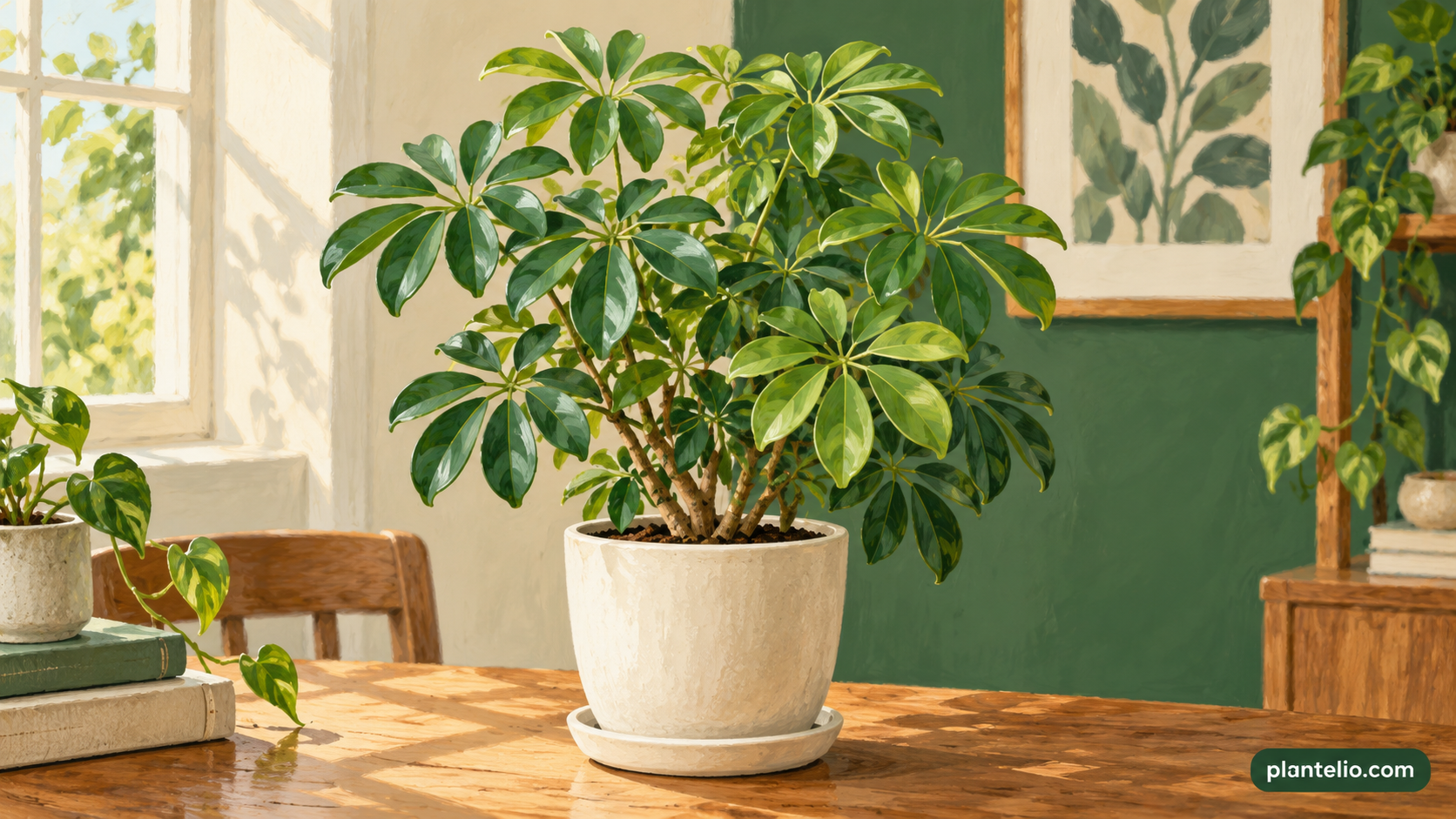
Dwarf Schefflera Care: Light, Watering and Room Placement
Dwarf Schefflera care starts with identifying the plant behind the shop label. The dwarf umbrella plant is now listed as Heptapleurum arboricola, with Schefflera arboricola as its former name. “Dwarf” distinguishes it from a larger relative; it does not promise a permanently small tabletop plant.
Choose a place with room to grow
NC State Extension’s dwarf umbrella tree profile gives a container-grown size of roughly 1.2–1.8 m (4–6 feet) in height and width. It recommends filtered light indoors and warns that bright direct exposure can burn the foliage.
Before buying a stand or moving furniture, measure the available space and photograph the proposed position. Include nearby doors and walkways in the picture. A good care location is one you can reach for checks as well as enjoy from across the room.
Dwarf Schefflera care: light and watering
Clemson Extension’s Schefflera guide recommends medium to bright light, thorough watering followed by drying of the upper 1.3 cm (½ inch) of mix, and emptying water from the saucer. It advises keeping plants away from hot or cold drafts, including heating and air-conditioning outlets.
Compare candidate locations using our bright indirect light guide. Then check the growing medium before adding water. Treat the depth guidance as a useful starting check, not a fixed number of days between waterings.
Record symptoms separately
Clemson lists excessive watering, chilling and low humidity among possible causes of leaf drop. Mealybugs, scale and mites can also be problems. Write down fallen leaves, moisture observations and room changes as separate entries. A symptom and a suspected cause are different pieces of information.
For example, “three leaves dropped after moving beside the vent” documents a sequence. “The vent killed the plant” assumes a conclusion that the record does not yet prove. Include a whole-plant photo and a close-up when seeking advice.
Manage size intentionally
Clemson describes pruning just above a leaf to help control size and feeding according to the fertilizer label. Reduced-light plants need less frequent feeding than those in brighter conditions. Keep the cultivar label because compact and variegated forms differ.
Choose a manageable outline before cutting rather than trimming randomly whenever a branch seems inconvenient. Add the date and a photo to the care record so the next assessment has a clear reference point.










Post Comment