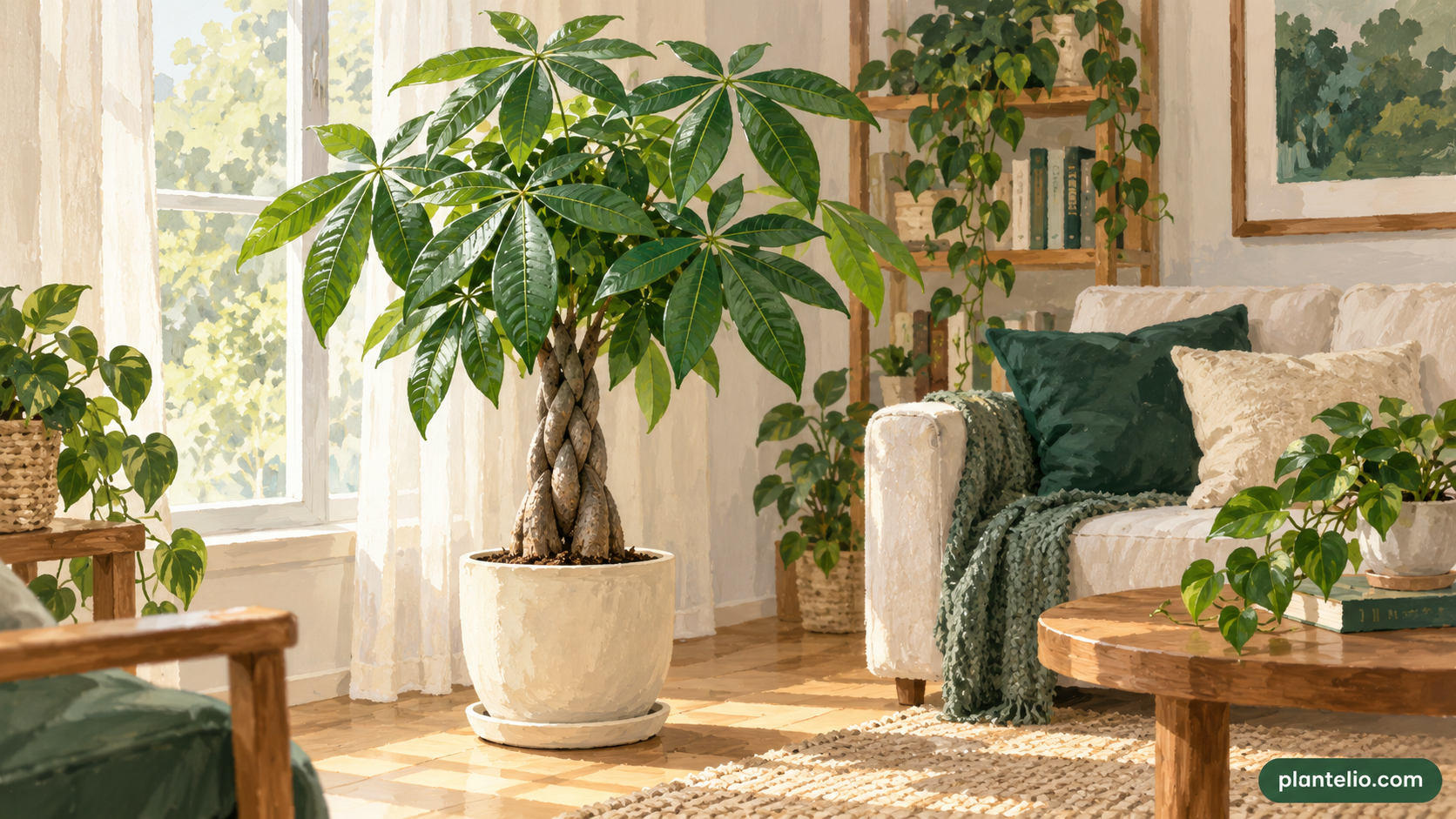
Money Tree Care: Light, Drainage and Braided Trunks
Money tree care is easier when you separate the plant’s needs from its decorative presentation. Pachira aquatica is a tropical tree, often sold with several trunks braided together. Its name and appearance do not tell you when the pot needs water. Start with the label, the light and the drainage.
Identify the plant before comparing advice
The RHS describes glossy leaves divided into five or more pointed leaflets. The familiar braid consists of multiple plants, rather than a single naturally twisted trunk. Check the botanical name on the label: advice for a jade plant or Chinese money plant is not automatically suitable for Pachira.
Keep a simple identification note with the purchase date and a whole-plant photo. If you later ask for help, include the label and the pot as well as the damaged leaf. This makes it easier to discuss the same plant and growing setup.
Choose bright, comfortable conditions
NC State recommends indirect light or a mixture of sun and shade, and notes that direct sun can scorch leaves. A warm room around 65–75°F (18–24°C) suits the plant. Check what reaches the foliage during the brightest part of the day; our guide to recognizing bright indirect light helps you assess the actual position.
Keep moisture and drainage together
Both NC State and the RHS describe a moist but well-drained root environment. A tropical riverbank origin is not a reason to leave an indoor pot in standing water. Check beneath the surface before watering and look inside any decorative outer pot for trapped runoff.
Follow our soil moisture checks instead of assigning every plant the same watering day. If the mix remains wet, postpone more water and review drainage. Record the result as “still moist” or “starting to dry,” along with the date, so you can see how this particular pot behaves.
Plan for growth and inspect the foliage
The RHS recommends spring pruning when shoots need shortening to control size. Its pest list includes scale, aphids and spider mites. Examine leaf undersides and stems during routine checks, especially when growth looks different.
Before cutting, decide which branch creates the space problem and photograph the intended shape. A clear objective is more useful than trimming every shoot simply because the tree has grown.
Sources: RHS: Pachira aquatica; NC State Extension: money tree.



Post Comment