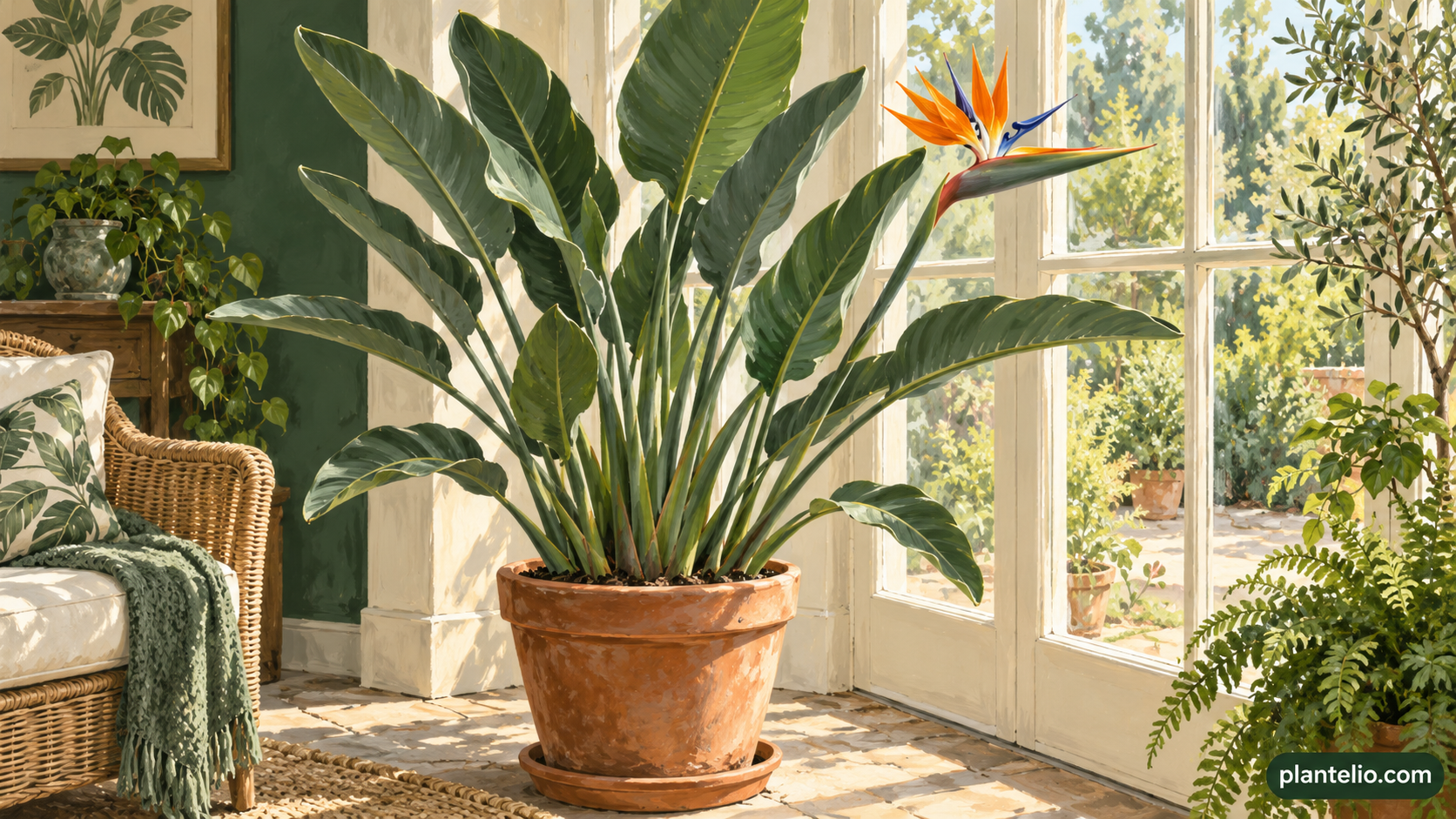
Bird of Paradise Care: Sunlight, Watering and Flower Expectations
Bird of paradise care begins with identifying which Strelitzia you own. This guide focuses on Strelitzia reginae, the clumping plant known for orange and blue flowers. The much larger white bird of paradise, often sold as S. nicolai, needs a different long-term space allowance.
Make room for a sunny position
NC State recommends a well-lit, sunny indoor position for S. reginae. Its leaves rise on long stalks from a clump at the base. Leave enough room for the leaves without forcing them against furniture or a walkway.
University of Wisconsin Extension identifies inadequate light as a common reason mature plants flower poorly. A bright-looking room is not always a sunny growing position. Use our guide to assessing indoor light to distinguish diffuse brightness from direct sun. For this plant, that distinction helps you avoid assuming that any bright corner will support flowering.
If moving the plant outside for summer, increase exposure gradually. Wisconsin cautions that a sudden move into stronger outdoor light can cause sunburn.
Adjust watering to growth and conditions
NC State advises generous watering during spring and summer growth, with drier conditions in winter. Use a well-drained mix and allow excess water to escape. A cooler, slower-growing indoor plant should not automatically receive its summer watering frequency.
Before adding water, check the potting mix and compare the result with your previous observation. Write down whether the pot remains damp and whether new leaves are extending. This turns “water less in winter” into a decision based on the plant in front of you.
Set realistic flower expectations
A small plant may need years to mature. Wisconsin notes that seed-grown plants can take four to seven years to begin flowering, and division can delay blooms. Buying an attractive foliage plant therefore does not guarantee flowers in the next season.
Keep a photo record of new leaves and the plant’s overall size. These observations are still useful when no flower appears. Avoid interpreting a flowerless month as proof that the entire care routine has failed.
Keep the leaves easy to inspect
Wisconsin recommends a soft cloth for cleaning large leaves and advises against leaf-shine products. NC State lists mealybugs, scale and spider mites among pests to monitor. During cleaning, inspect both sides of each leaf and the sheltered places near its stalk.
Sources: University of Wisconsin Extension: bird of paradise; NC State Extension: Strelitzia reginae.











Post Comment