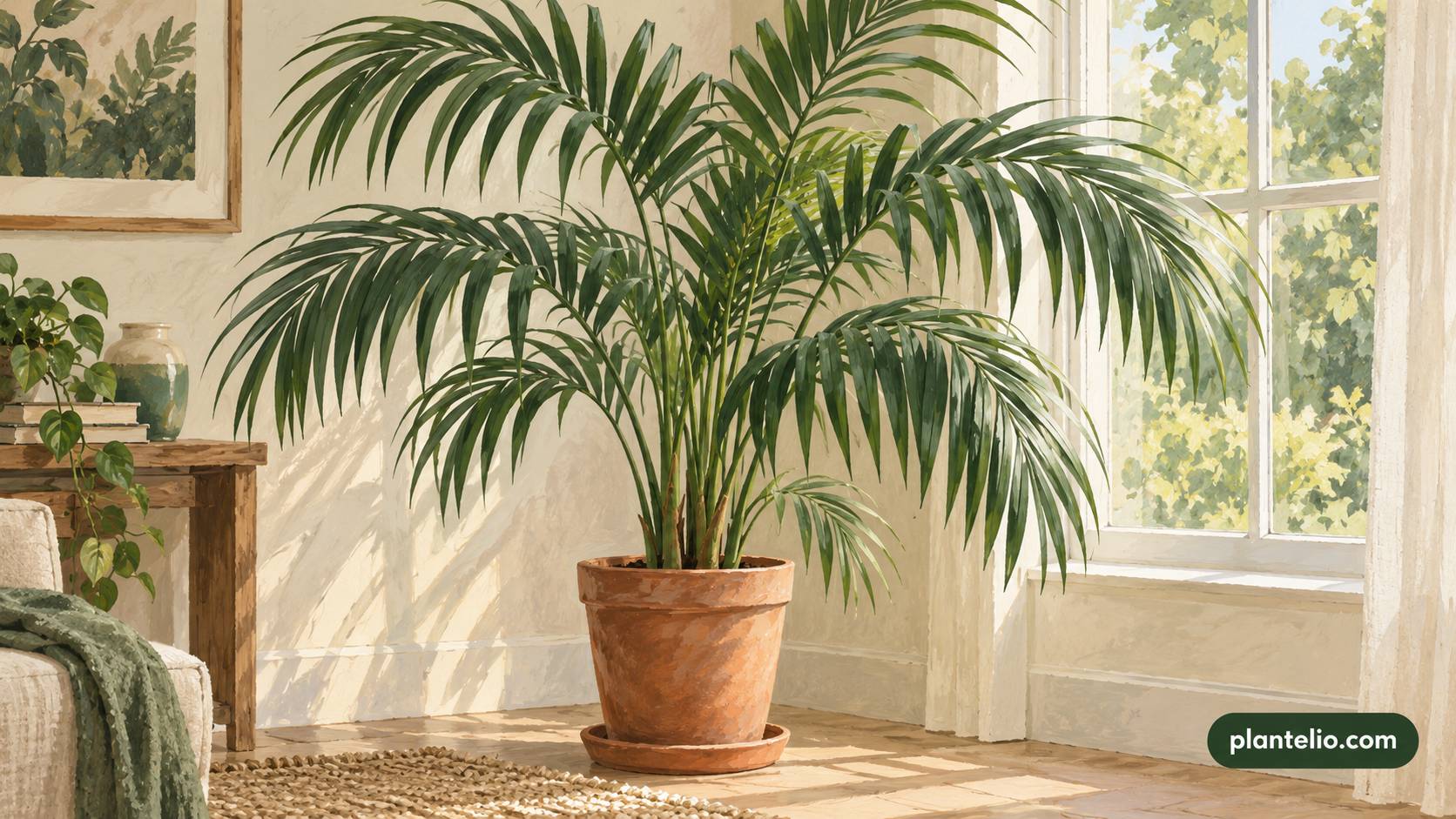
Kentia Palm Care: Filtered Light and Careful Watering
Kentia palm care works best when you allow for a slow-growing plant with long, spreading fronds. Howea forsteriana can make an elegant indoor specimen, but it still needs a suitable position and a watering routine based on the pot. Start by checking the light and the space around the leaves.
Choose filtered light and room to spread
The RHS recommends bright, filtered light for indoor palms and notes that Kentia tolerates relatively low light. Tolerance is useful when choosing a room, but it does not make a windowless corner a good permanent home. Protect the leaves from strong direct sun through glass and keep the plant away from radiators and drafts.
Use our bright indirect light guide to assess the position at leaf height. Check the outermost fronds as well as the center: a plant may fit its floor space while its leaves extend into a busy passage.
Check moisture before adding water
UF/IFAS warns that Kentia does not tolerate severe drying or continual overwatering, particularly in winter. The RHS advises allowing the compost surface to dry slightly before winter watering and avoiding standing water.
Before watering, compare the mix and pot weight using our soil moisture checks. Empty the saucer or decorative outer pot after drainage. Record whether the mix is still moist instead of treating a calendar reminder as an instruction to water.
Inspect fronds without aggressive tidying
UF/IFAS identifies spider mites, mealybugs and scale as pests to watch for on indoor specimens. It also cautions against tearing attached old leaf bases from the trunk, because this can scar the plant. Avoid pulling at a stubborn leaf base just to make the stem look cleaner.
During an inspection, photograph the whole palm, the affected frond and the underside of a leaflet. Note whether the change affects older outer leaves or newer growth. Those observations are more useful than a close-up with no context.
Track growth over time
UF/IFAS describes Kentia as slow growing. Compare photos taken several weeks apart rather than expecting dramatic daily changes. Keep the date, moisture observation and any move to a new position together in one note. This gives future care decisions a clear starting point.
Sources: RHS: indoor palms; UF/IFAS: Howea forsteriana.










Post Comment