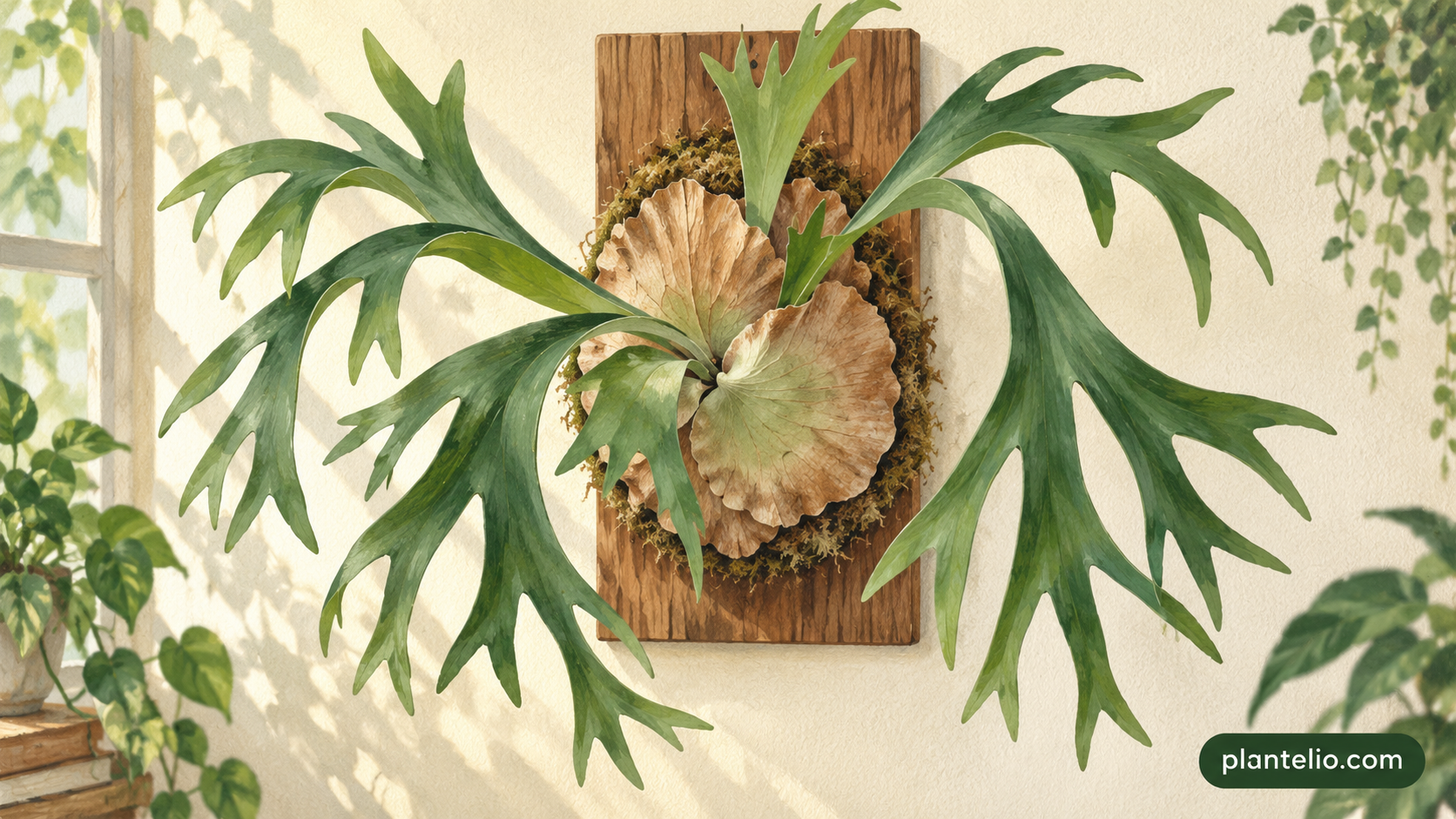
Staghorn Fern Care: Shields, Light and Mounted Roots
Staghorn fern care becomes easier when you recognize its two different kinds of fronds. Platycerium bifurcatum has branching green fronds and a flatter shield around its base. A brown shield is not automatically a sign that the whole plant is dying.
Understand the shield before tidying
Wisconsin Extension explains that young basal fronds start green, then become papery brown as they age. These shields protect the roots and collect organic debris. Leave an intact aging shield in place instead of peeling it away for a greener appearance.
Brown areas beneath the tips of mature branching fronds can also be normal reproductive structures. UF/IFAS describes these spore-producing areas as resembling brown felt. Compare the location and pattern before treating every brown mark as a pest.
Choose a bright, sheltered display
This fern is an epiphyte: it naturally grows on a support rather than rooting in ordinary garden soil. Wisconsin Extension describes boards, bark slabs and open baskets as common indoor supports. Good drainage is central to the arrangement.
UF/IFAS recommends shade or partial shade and cautions against very low light. Indoors, assess the actual wall position with our bright indirect light guide. A wall beside a window may receive much less light than the sill itself.
Check the mount before watering
UF/IFAS warns that overwatering can cause rot and that watering needs decrease in cool or cloudy conditions. A mounted plant and a tightly packed nursery pot will not necessarily dry at the same pace.
Before watering, inspect an accessible edge of the growing medium without pulling back the shield. Note whether it remains damp and how heavy the mount feels. Let excess water drain before returning it to the wall; include a place for this draining step in your display plan.
Separate room humidity from root moisture
The plant favors warm, humid conditions, but humid air does not tell you whether its root ball needs water. Measure humidity near the fern and keep that reading separate from your watering notes.
Keep the species label, a photograph of the shield and the date of any move together. If something changes, these details are more useful than a photograph of one isolated brown patch.
Sources: Wisconsin Extension: Staghorn fern; UF/IFAS: Staghorn ferns.










Post Comment