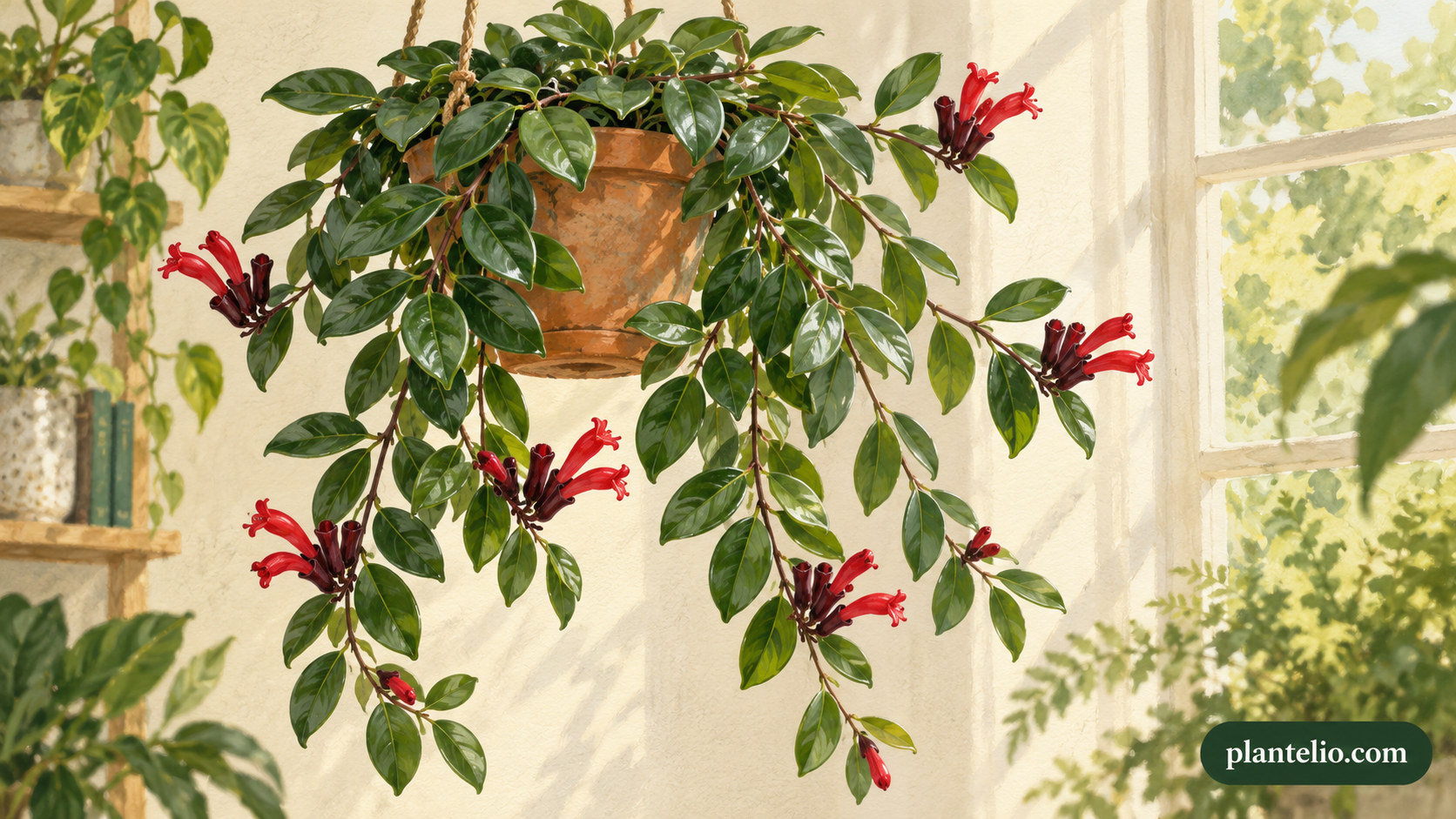
Lipstick Plant Care: Light, Water and Trailing Flowers
Lipstick plant care combines bright filtered light with a pot that drains well. Aeschynanthus radicans carries leathery green leaves on trailing stems, with red tubular flowers emerging from darker cups. Its hanging habit makes a good display only if you can still reach the pot to check it.
Light the upper stems as well as the flowers
The RHS recommends bright, filtered light for growth and flowering. NC State likewise advises bright indirect light rather than full sun. Place the basket where the whole plant receives useful light, rather than hiding the pot above the window while only the trailing ends remain visible.
Use our guide to bright indirect light to compare possible positions. Record when direct sunshine reaches the foliage. This makes a later move easier to evaluate without guessing what changed.
Keep moisture and drainage in balance
The RHS recommends peat-free houseplant compost, generous watering during active growth and a lighter watering routine in winter. NC State emphasizes good drainage. Neither recommendation means leaving the inner pot in a reservoir of runoff.
Before watering, check moisture in the potting mix. Lower the basket safely if you cannot inspect it in place. Water where runoff can drain, then return it to its display position once dripping has stopped.
Provide warmth and moving air
NC State describes a warmth-loving plant that appreciates humidity together with air circulation. Stagnant, damp conditions can encourage fungal problems. It also notes that temperatures below 50°F (10°C) may cause leaf drop.
Keep a record of cold-window exposure if leaves begin falling. Do not assume that extra watering will solve a problem that followed a chilly night. Check the conditions first and avoid changing several parts of the routine at once.
Set realistic flowering expectations
The RHS describes intermittent flowering from spring to autumn, rather than a guarantee of continuous blooms. It recommends a half-strength general liquid feed monthly from mid-spring to late summer and trimming weak or overly long shoots when needed. Follow the fertilizer label when preparing a solution.
Keep the plant label and photograph flowering stems before pruning. This gives you a reference for its normal growth habit and helps distinguish a seasonal pause from a sudden change.
Sources: RHS: Aeschynanthus radicans; NC State Extension: Lipstick plant.



Post Comment