Piggyback Plant Care: Understanding the Babies on Its Leaves
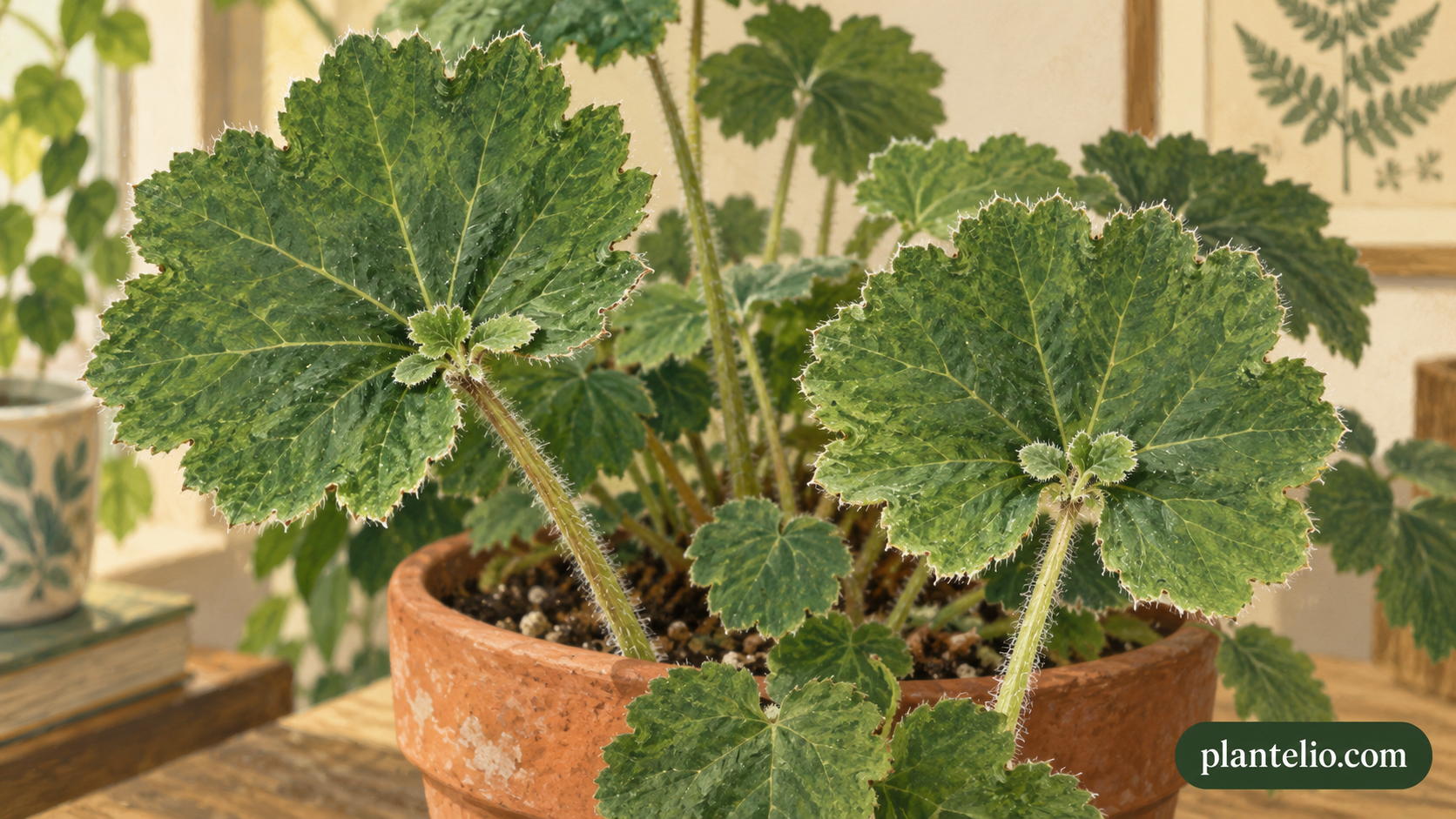
Piggyback plant care starts with understanding its unusual new growth. Tolmiea menziesii can produce small plantlets on mature leaves. These little clusters are the reason for its common name, rather than an automatic sign that something is wrong.
Locate the plantlets
NC State describes plantlets forming where the leaf stalk meets the mature leaf. Its hairy, maple-like foliage has five to seven lobes. Look for a small developing plant at that junction instead of expecting babies along every leaf edge.
Photograph the same mature leaf over time if you want to observe development. Keep the botanical name with your record; common names such as mother of thousands are also used for unrelated plants.
Assess the room honestly
UBC Botanical Garden notes that piggyback plant is familiar as a houseplant but can be short-lived indoors because it prefers cool, humid conditions. Its interesting appearance does not make it equally suitable for every heated room.
Illinois Extension lists it among houseplants for medium light. Our indoor light guide helps you describe your available position. Compare actual conditions before choosing a display location based only on how the plant looks there.
Monitor the growing medium
NC State recommends fertile, moist soil and high humidity. Use our soil moisture checking methods to inspect the container without relying entirely on the appearance of the foliage.
Make a short note of the mix condition whenever you check. A dense canopy can make the pot difficult to see, so keep an accessible edge. Air humidity and moisture inside the container are separate observations; record both if you are troubleshooting.
Plan before making more plants
RHS lists removing plantlets from leaves in summer as one propagation option, along with spring division. You can also leave a plantlet in place to observe it rather than treating every new one as an urgent propagation project.
Before separating anything, decide how many plants you can accommodate and prepare labels. A collection of unnamed small pots quickly becomes difficult to track. Keep notes on which parent leaf produced each plantlet and when you separated it.
Sources: NC State Extension; UBC Botanical Garden; Illinois Extension; RHS: Tolmiea menziesii.

Post Comment