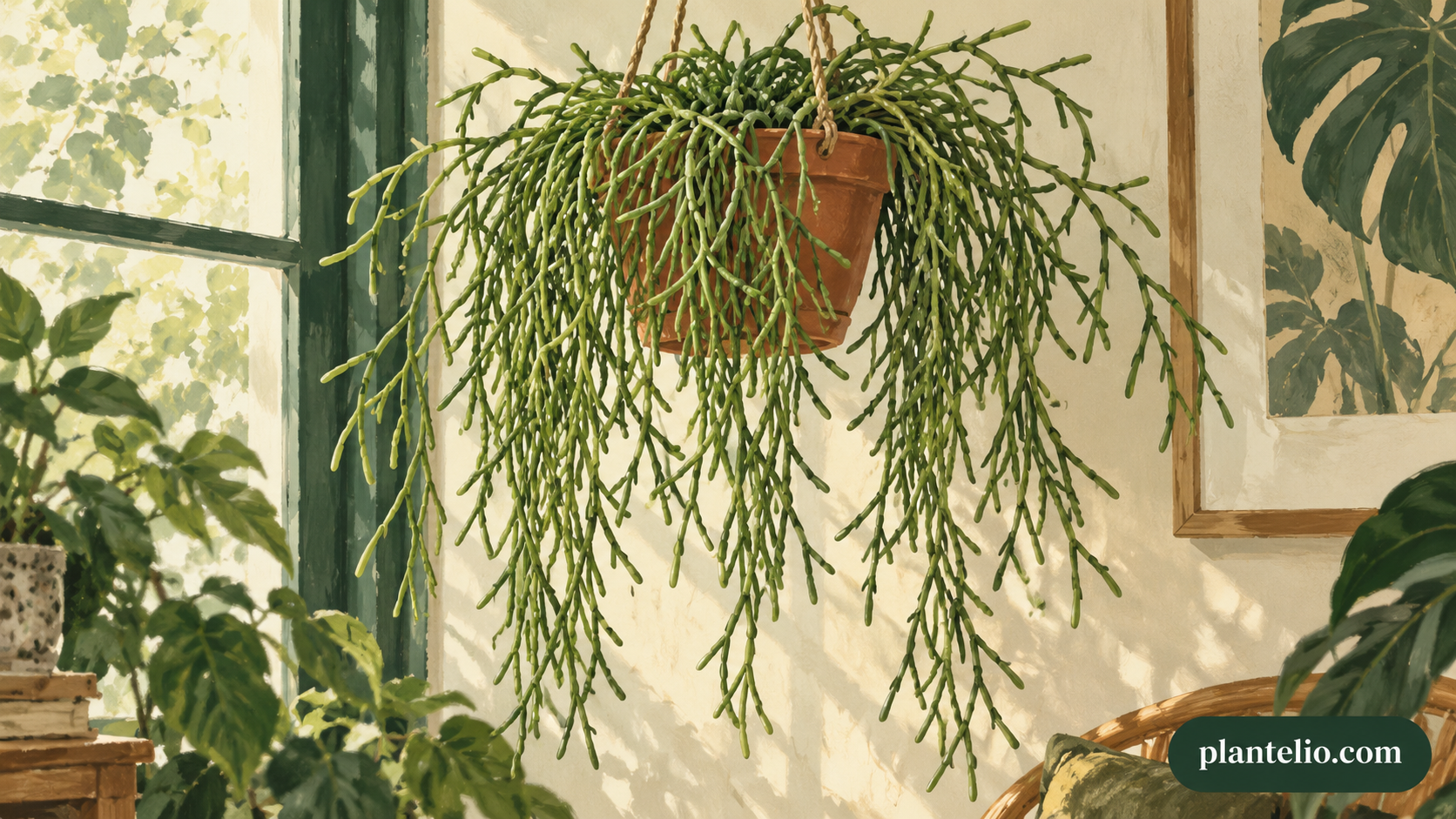
Mistletoe Cactus Care: A Forest Cactus for Hanging Displays
Mistletoe cactus care should reflect its forest-growing habit. Rhipsalis baccifera is an epiphytic cactus with slender, trailing stems. The word cactus on a label is not enough reason to give it the same conditions as a sun-loving desert species.
Recognize the stems
RHS describes cylindrical green or pale blue-green stems, with sparse bristles on young growth that often disappear as stems mature. The hanging strands are stems, not narrow leaves that need to broaden as the plant grows.
NC State describes the plant growing on understory trees in its native habitat and being used as a hanging houseplant. Plan the display around that trailing form. Leave space below the pot and an accessible route for watering checks.
Choose bright indirect light
RHS recommends bright indirect light for cultivation under glass. Our bright indirect light guide helps you evaluate a hanging position before installing the plant there.
A high hook can put the container in a different light zone from a nearby tabletop. Check the light at the stems themselves. The most attractive corner of a room is not automatically the most suitable growing position.
Check moisture instead of copying a desert routine
NC State recommends watering when the growing mix feels dry, avoiding overwatering, and notes that the plant prefers more consistent moisture than many other cacti. Our soil moisture checking methods provide a practical way to inspect the pot.
RHS recommends an epiphytic cactus compost, moderate watering during growth and keeping the plant just moist in winter. Record the current condition of the mix rather than treating every calendar reminder as a command to water.
Leave room for a long display
RHS notes that stems can become metres long and may be trimmed if needed. Decide where the lowest stems can hang without interfering with everyday access before the display becomes crowded.
NC State warns that direct sun can scorch stems and excessive watering can cause mushy growth or root rot. If the plant changes, examine both the location and the mix rather than assigning every symptom to thirst. A photograph of the whole display can reveal conditions that a close-up misses.
Sources: RHS: mistletoe cactus; NC State Extension: Rhipsalis baccifera.










Post Comment