Polka Dot Begonia Care: Light, Water and Cane Growth
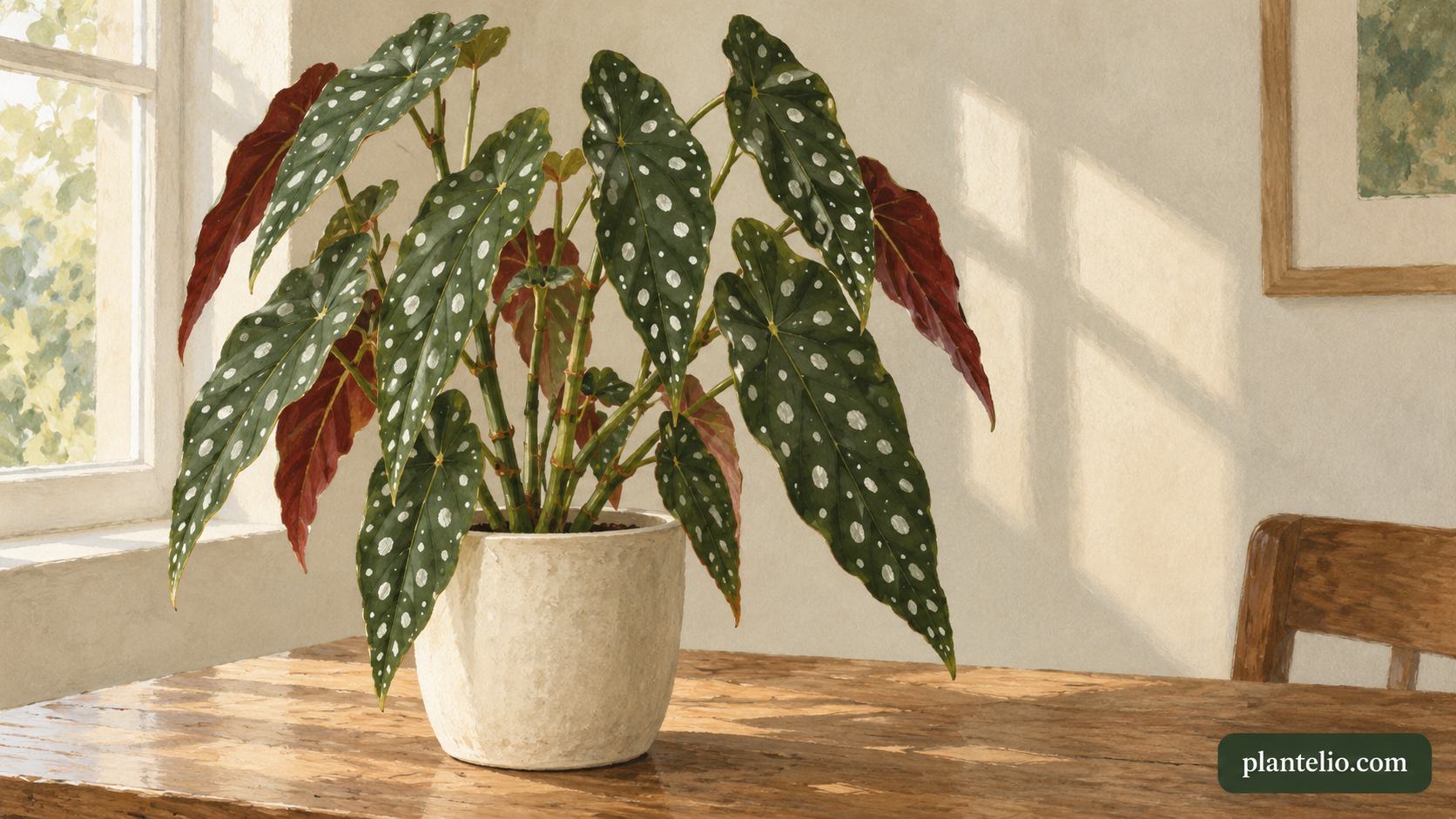
Polka dot begonia care is easier when you recognize its growth habit. Begonia maculata carries spotted, asymmetrical leaves on upright canes. It belongs to a different growth group from the low, rhizomatous rex begonias often displayed nearby.
Make room for upright growth
NC State describes cane begonias as upright plants that can lose lower leaves as their stems develop a cane-like appearance. This does not mean every bare section needs emergency treatment. Compare the plant’s newest leaves with older growth before deciding what has changed.
Choose a position where the stems have room above them. Take a photo of the whole plant as well as a close-up of a leaf; a tight leaf photograph cannot show whether a long cane is leaning into a walkway.
Filter strong sunlight
The RHS recommends filtered light with protection from hot sun. Its species profile describes green leaves with white or silver spots and red undersides. Those red backs are part of the plant’s normal appearance, rather than a reason to move it immediately.
Use our bright indirect light guide to assess the position at different times of day. A comfortable morning location can receive a very different afternoon sunbeam.
Water the compost, then let it drain
Use a light, well-drained potting compost. Water moderately during growth and avoid waterlogging. Do not interpret a decorative outer pot as permission to leave runoff around the roots.
Before watering, use these soil moisture checks. Write down both the moisture reading and whether the plant is actively growing. This makes a later review more useful than a list of watering dates alone.
Plan pruning instead of reacting to height
The RHS advises cutting overlong canes back to two or three buds in late spring. First decide which stems actually need shortening. Do not make several large changes simply because the plant looks less compact than its shop photograph.
Keep a short care record with the plant’s name, position, and recent changes. When a problem appears, this helps separate a new symptom from a feature that was already present when you brought it home.
Sources: RHS: Begonia maculata; NC State Extension: Begonia growth groups.


Post Comment