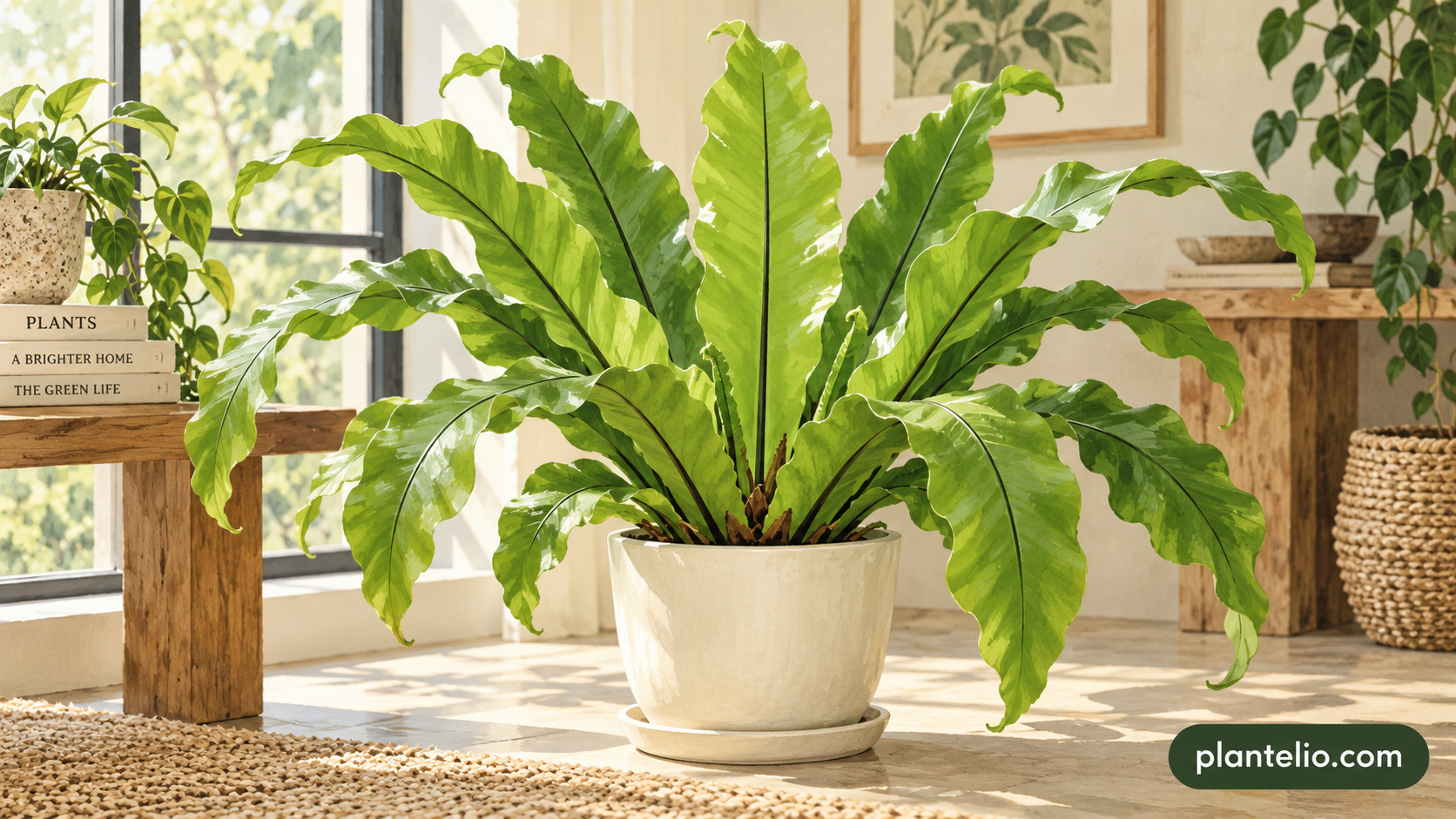
Bird’s Nest Fern Care: Light, Moisture and Gentle Handling
Bird’s nest fern care is easier to organize when you separate three questions: whether its location provides suitable light, whether its pot needs water, and whether the surrounding air suits it. This guide focuses on Asplenium nidus. Keep its identification label, since a shared common name is not always enough to identify the exact plant you own.
Make room for the fronds
NC State Extension describes Asplenium nidus as a tropical fern with broad, undivided, strap-shaped fronds arranged in a rosette. The fronds have dark midribs and wavy edges. Handle the foliage gently; it is fragile.
Choose a position where you can examine the plant without repeatedly folding its fronds out of the way. When arranging a shelf, allow room for the full spread rather than measuring only the pot. A stable, accessible location will make every later care check easier.
Use suitable light without harsh exposure
NC State recommends bright light or light shade and warns that excessive sun can cause yellowing or interfere with growth. It also advises avoiding direct heat and drafts. Its suggested temperature range is approximately 60–70°F (16–21°C).
Record the chosen position and observe it at different times of day. If the plant looks different later, this gives you a useful starting point for comparison. Do not assume that the brightest-looking empty shelf is automatically the best place.
Keep moisture and drainage in balance
The species profile recommends a moist, porous growing medium and notes that this fern does not tolerate dry conditions. This is not a cactus-style drying routine, but moisture does not mean leaving the pot standing in water.
The University of Maryland’s indoor watering guidance recommends checking need and removing excess drainage water. Our soil-moisture guide can help you compare observations before deciding what to do. Apply those checks to the fern’s moisture requirements rather than waiting for the entire pot to become very dry.
Measure the air separately
If you are assessing the room’s humidity, use our humidity-measurement guide. Write the reading beside the location and time. Do not substitute extra pot watering for an observation about the air.
Keep a simple record of watering, location changes and photographs. Under mature fronds, this species can form regular dark lines of spore structures, as NC State illustrates; these should not automatically be mistaken for insects. If marks are unfamiliar, compare clear photographs with a reliable identification source before treating the plant.


Post Comment