Boston Fern Care: Moisture, Humidity and Arching Fronds
Boston fern care involves two different moisture questions: what is happening in the pot, and what is happening in the air? Keep those observations separate. A damp growing medium does not tell you the room’s humidity, and a humid room does not confirm that the roots have enough water.
Boston fern care essentials
NC State Extension’s Boston fern profile recommends bright indirect light, moist soil and high humidity. It gives a warm indoor range around 16–21°C (60–70°F). The growing medium should not dry out completely, but excess water can still cause root rot. Reduce watering in winter as growth and demand slow, while continuing to check the pot.
The RHS profile for ‘Bostoniensis’ adds bright filtered light, moderate to high humidity and good ventilation. It warns that fronds can rot when kept too wet and recommends removing dead fronds. Humidity is not a reason to keep the foliage constantly soaked.
Keep two separate checks
Use our soil-moisture checking guide for the pot and our guide to measuring humidity near houseplants for the air. A useful record has separate columns for each, followed by any action taken.
For example, write the humidity reading with its time and position, then note the mix condition. This avoids treating a room measurement as a watering instruction. If the plant is on a high stand, choose a safe way to reach the pot before settling on that location.
Allow space for the fronds
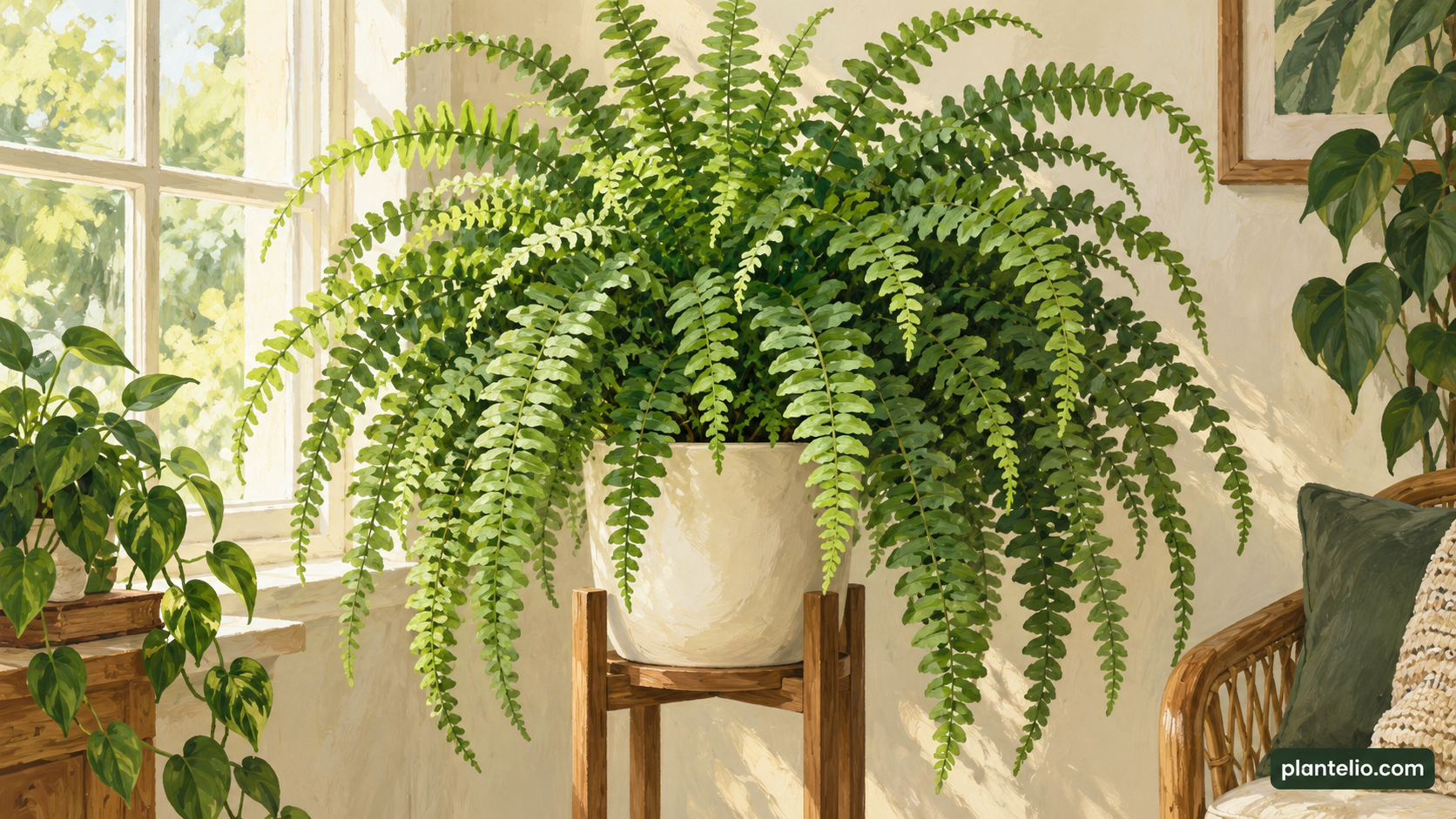
RHS describes fronds that start upright, then arch and droop with age. The ‘Bostoniensis’ cultivar can become about 90 cm (3 feet) tall and wide. Leave room around the display rather than expecting every frond to stay inside the outline of a newly purchased plant.
Photograph the whole fern from the same position when checking its shape. Include the pot and stand in the picture so you can judge how the growing plant fits the space.
Recognize normal features before treating
NC State explains that patterned dark dots underneath fern fronds can be normal spore-producing structures rather than pests. Scales and spider mites are also possible, so examine the pattern and take a clear photo instead of assuming every mark has the same cause.
Keep the cultivar name and any recent changes to location, watering or heating with those photos. That information helps you ask a focused question if the plant continues to decline.










Post Comment