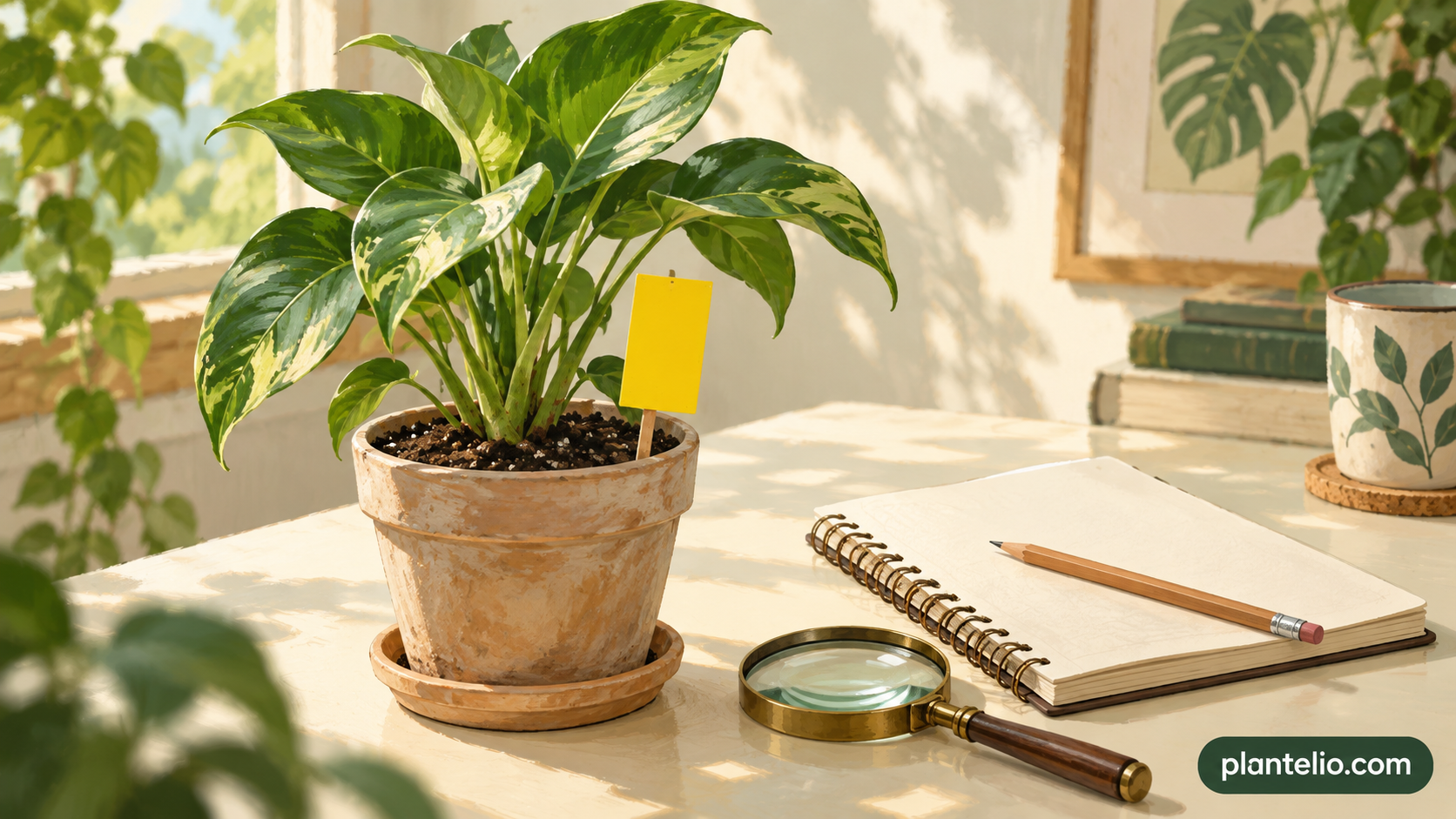
Yellow Sticky Traps for Houseplants: What They Can Tell You
Yellow sticky traps for houseplants can reveal flying insects you might otherwise overlook. They are most useful when you treat each card as an observation tool and inspect the plant alongside it.
What a yellow card detects
Sticky cards catch insects that contact their adhesive surface. The University of Minnesota lists sticky traps as a way to detect flying pests including fungus gnats, whiteflies, winged aphids and thrips. A catch still needs identification; a small dark mark is not automatically a fungus gnat.
For fungus gnats, cards catch the adults. They do not remove eggs, larvae or pupae in the potting mix. Iowa State Extension specifically notes that trapping flying adults does not prevent new insects from hatching.
Set up a comparison you can repeat
Follow the trap’s placement instructions. For monitoring fungus gnats, position a card near the potting surface without letting the adhesive touch leaves or mix. The University of California’s fungus gnat guide describes using cards near the growing medium.
Label a record with the plant name, card location and start date. Keep the location and observation interval consistent when comparing later catches. A card left out for a month cannot be fairly compared with a fresh card checked after one day.
- Record the number of new suspected target insects over the same interval.
- Photograph the card before replacing it.
- Note watering changes, cleaning or movement of the plant.
- Replace a dirty or crowded card according to the product instructions.
Read the result cautiously
A rising count is a reason to inspect more closely, not an automatic instruction to spray. A falling count can be encouraging, but it does not prove that every life stage has disappeared. An empty card also cannot certify that a plant is pest-free.
Continue examining leaves, stems and pot crevices. Pests that remain on the plant may never reach the card. Use the same inspection approach each time and keep the results in your plant care log.
Pair monitoring with the right next step
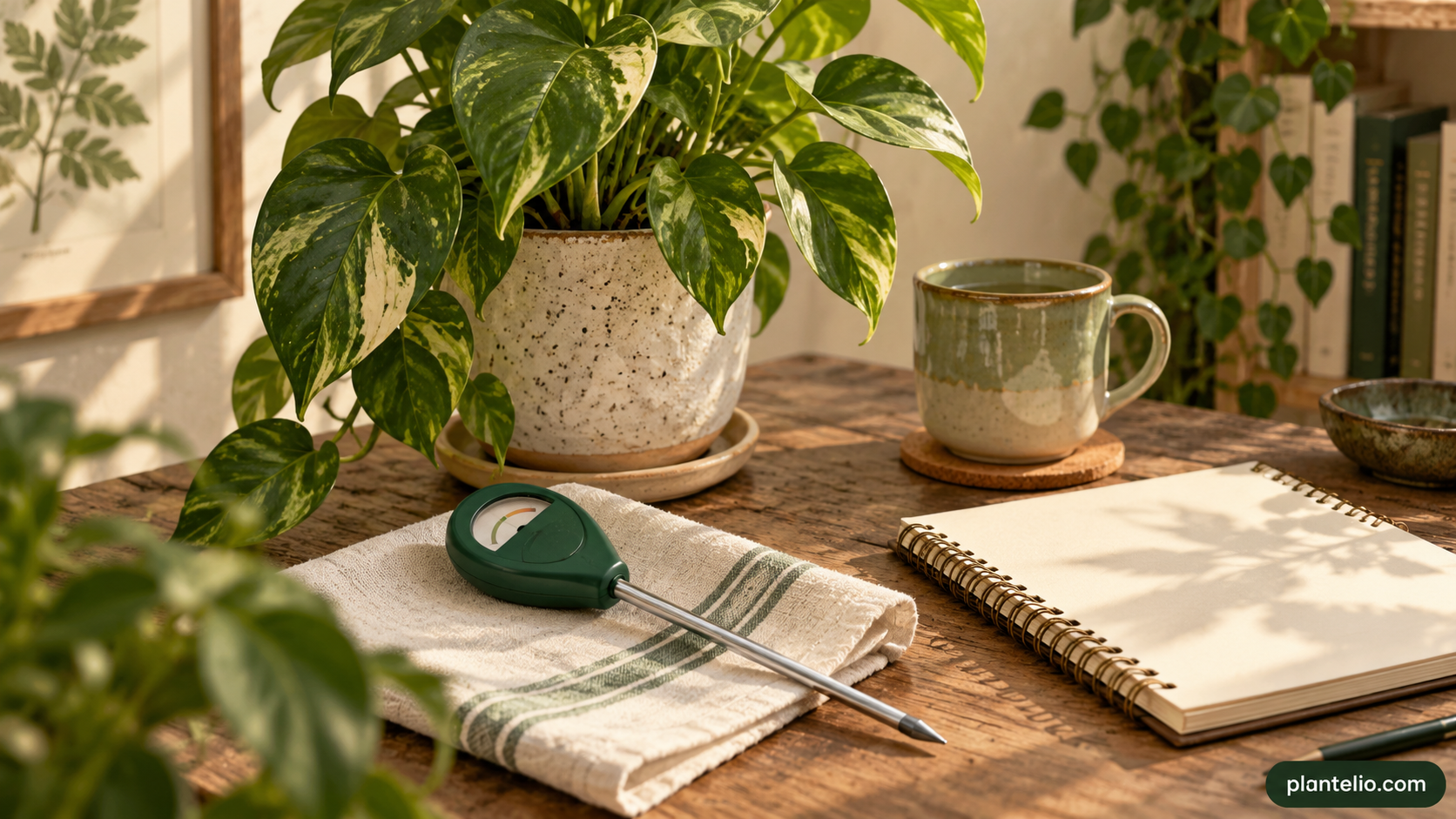
If the catch appears to be fungus gnats, check the mix and watering conditions as well as the insects. Our soil moisture guide helps you review watering without relying on a calendar. If identification remains uncertain, take a clear photograph and seek help before choosing a treatment. The card supplies a clue; the plant and its growing conditions complete the picture.

Post Comment