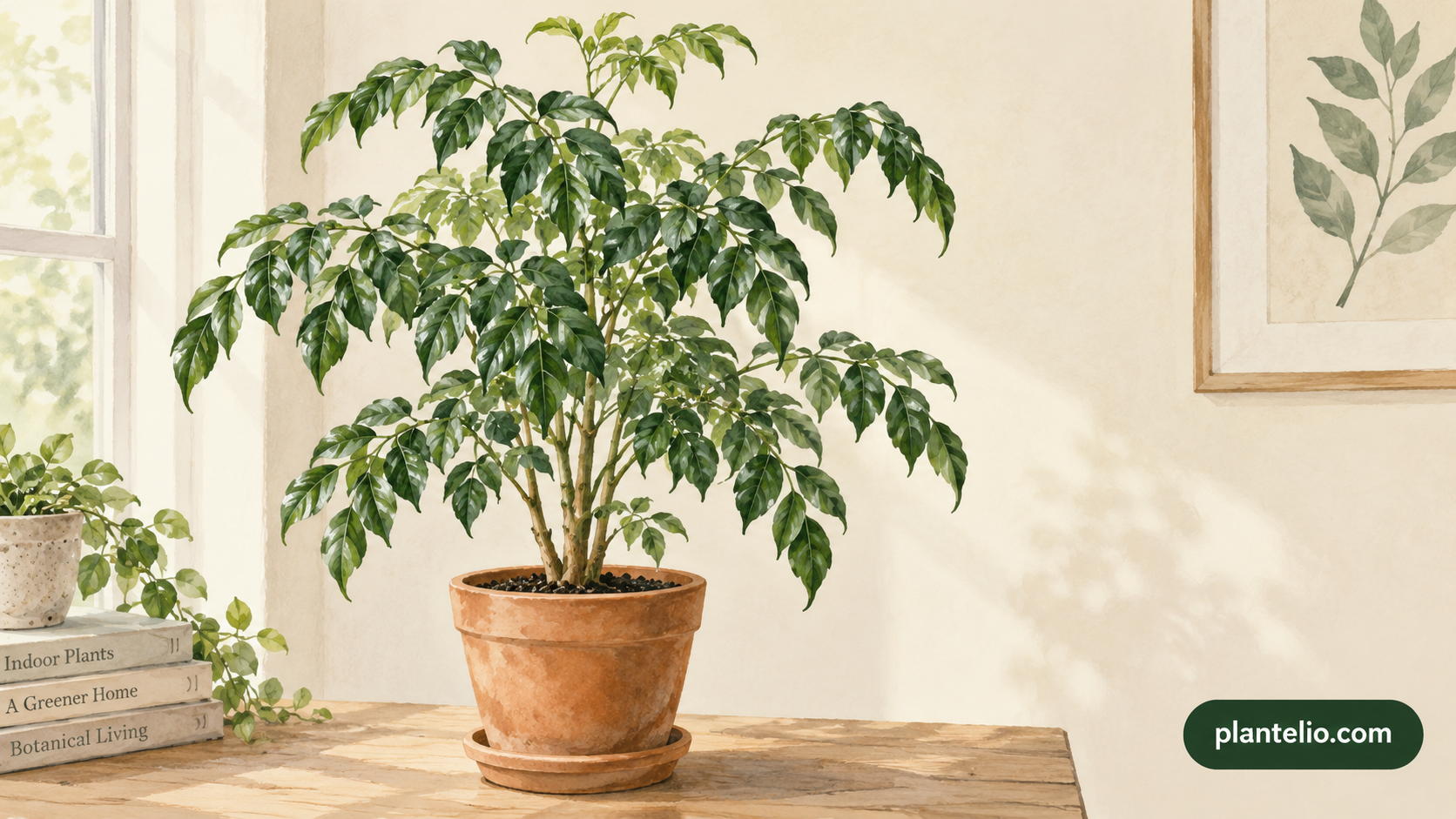
China Doll Plant Care: Why a Compact Plant Grows Taller
China doll plant care is easier when you know that Radermachera sinica is a tree. Its small, glossy leaflets can make a shop plant look like a permanent miniature. That appearance is not a promise that it will stay the same height or keep exactly the same spacing between leaves.
Compact shop growth is only a starting point
Macquarie University’s plant profile explains that China doll can become a substantial outdoor tree in a suitable climate. It also notes the use of growth regulators by European nurseries to produce compact plants with dense foliage. This helps explain why a commercially grown specimen may look different from later growth at home.
You cannot tell from appearance alone whether your particular plant received such treatment. Ask the supplier if that detail matters to you. Do not interpret every longer stem as proof of poor care, and do not assume a plant sold for a windowsill is suitable for a small garden bed.
Choose a position you can maintain
RHS recommends a warm position with bright, indirect light. Use our bright indirect light guide to assess the intended space. Make room for the branches as well as the container, and consider how you will reach the pot for watering.
RHS warns that changes in growing conditions, including moving the plant, can cause leaf drop. If leaves fall after purchase, record the move and any obvious changes in light or temperature. That history is useful context; leaf drop by itself does not identify one certain cause.
Do not respond with automatic extra watering
RHS also lists root rot as a risk when conditions are too wet. Check the medium before adding more water to a plant that is shedding leaves. Our soil moisture checking guide offers a repeatable approach. Keep observations of fallen leaves separate from observations of wet or dry mix.
Plan for growth instead of chasing the shop shape
RHS suggests pinching young shoot tips to encourage branching and cutting back older plants when size control is needed. Decide what shape and space you can accommodate before making repeated cuts.
Take a monthly photograph from the same angle and note major changes in position. Compare new growth over time, not just against the day of purchase. A fuller care record helps you distinguish a changing growth habit from a sudden decline.
Sources: RHS: Radermachera sinica; Macquarie University: China Doll plant profile.











Post Comment