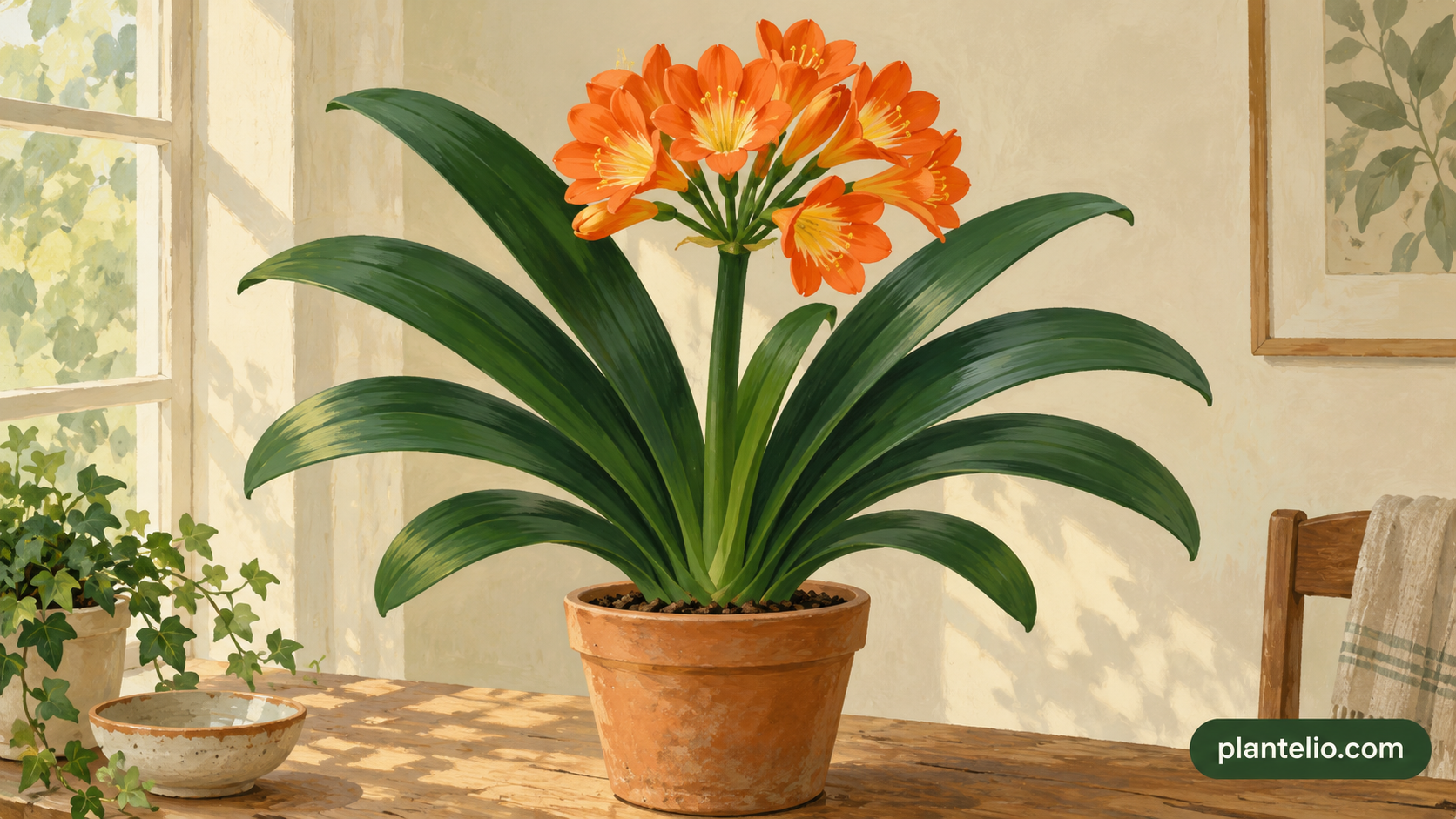
Clivia Care: A Cool Rest for Better Flowering
Clivia care changes with the season. A mature plant can carry an impressive cluster of orange flowers, but treating it exactly the same throughout the year may leave you with healthy leaves and no blooms. Start with its growing conditions before reaching for fertilizer.
Choose filtered light and a steady position
The Royal Horticultural Society recommends bright, filtered light, with protection from strong summer sun. Keep the plant away from heaters and cold draughts. Our guide to bright indirect light helps you judge the actual position rather than the window label alone.
Plan a cool winter rest
RHS guidance suggests a cool winter position around 10°C (50°F) to encourage flowering. Water sparingly during this period, without letting the compost become completely dry. Increase watering as flower buds develop and active growth resumes. This is a seasonal adjustment, not an instruction to leave every clivia dry for a fixed number of weeks.
Write down the temperature at the plant’s location and the date buds first appear. A spare room can differ greatly from a heated living room. If you cannot provide cooler conditions, record that limitation instead of repeatedly changing pots or adding feed to force a result.
Keep water out of the leaf fan
New York Botanical Garden describes clivia as a rhizomatous plant rather than a true bulb. During active growth, water thoroughly and let the pot drain. Avoid pouring water into the center of the leaf fan, where retained moisture can encourage crown rot. Check the root zone before watering again using our soil moisture checking routine.
Repot for a reason
NYBG notes that clivias grow slowly and may need repotting only every three to five years. Overcrowding or deteriorated, poorly draining mix is more useful evidence than a birthday on the calendar. Choose just one pot size larger when repotting is needed. Once flower buds develop, avoid moving the plant unnecessarily.
Keep a simple seasonal record: winter location, watering checks and flowering dates. Compare your plant with its own previous year, allowing for age and changing household conditions. Flowering is not guaranteed by any single care step.
Sources: RHS clivia growing guide; New York Botanical Garden: Clivia.


Post Comment