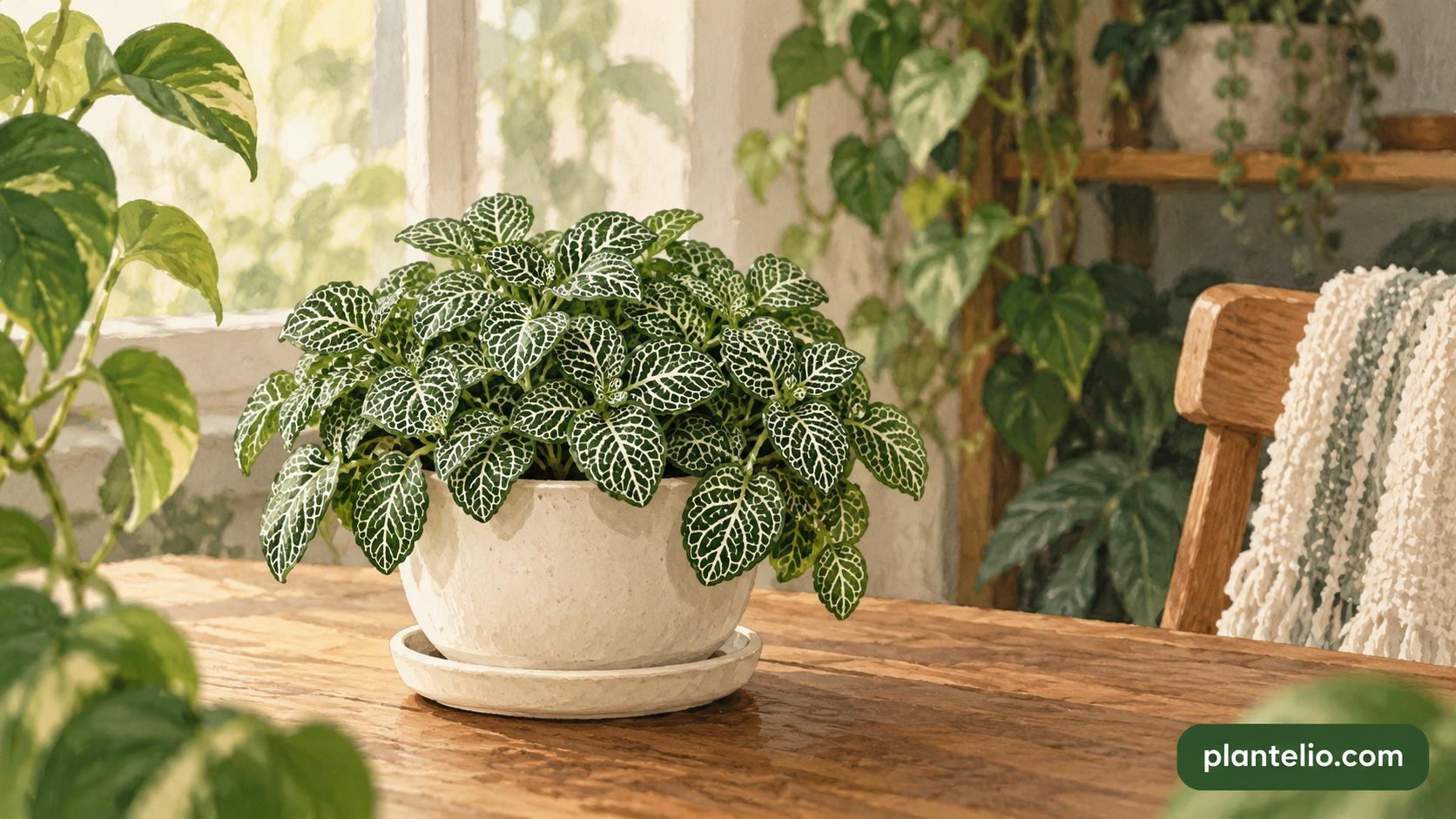
Fittonia Care: Moisture and Humidity for Nerve Plants
Fittonia care works best when you keep two moisture questions separate: how wet the growing medium is and how humid the surrounding air is. A nerve plant’s small patterned leaves make it appealing for a desk or shelf, but appearance alone does not tell you whether that position suits it.
Start with the location
The Royal Horticultural Society’s Fittonia guide recommends a bright position outside direct sun, humid air and temperatures above 17°C (63°F), with protection from cold drafts. It describes Fittonia albivenis as a low-growing plant with contrasting white, pink or red veins.
Keep the original label and photograph its normal markings. Before choosing a permanent place, note whether sunlight falls directly on the leaves and whether the spot is affected by a frequently opened window. A compact plant is easy to fit somewhere physically; that does not settle the growing conditions.
Check the compost before responding to drooping
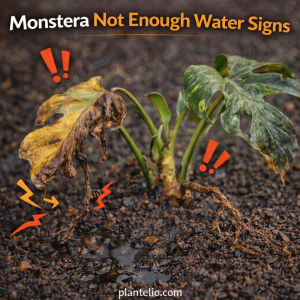
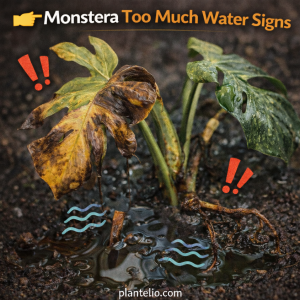
The RHS recommends moisture-retentive houseplant compost but warns against waterlogging. It notes that lack of water can cause wilting and that a dry plant often recovers after thorough watering. That observation should not become a routine of deliberately waiting for collapse.
Use our soil-moisture check to establish what is happening in the pot. If the medium is dry and the plant needs water, address that need. If it is already wet, repeated watering is not a useful automatic response to the same appearance.
Record the observation and the action separately. For example, “drooping, medium still wet, no additional water” preserves information that would be lost in a simple watering calendar.
Assess the air without adding water to the roots
Use our humidity-measurement guide to assess the proposed location. Keep the reading with its time and position. A bathroom label or a damp-looking room is not a measurement.
The RHS identifies terrariums as a suitable setting for this compact, humidity-loving plant. If you choose that approach, use a terrarium-specific setup guide; an enclosed container is a different growing arrangement from the open pot illustrated here.
Review a pattern, not one moment
Compare the same plant over several checks, keeping notes about the pot and air in separate columns. When a problem persists, retain photographs and the recent care history rather than repeating the last attempted fix. Those details help you ask a more specific question about the plant’s conditions.

Post Comment