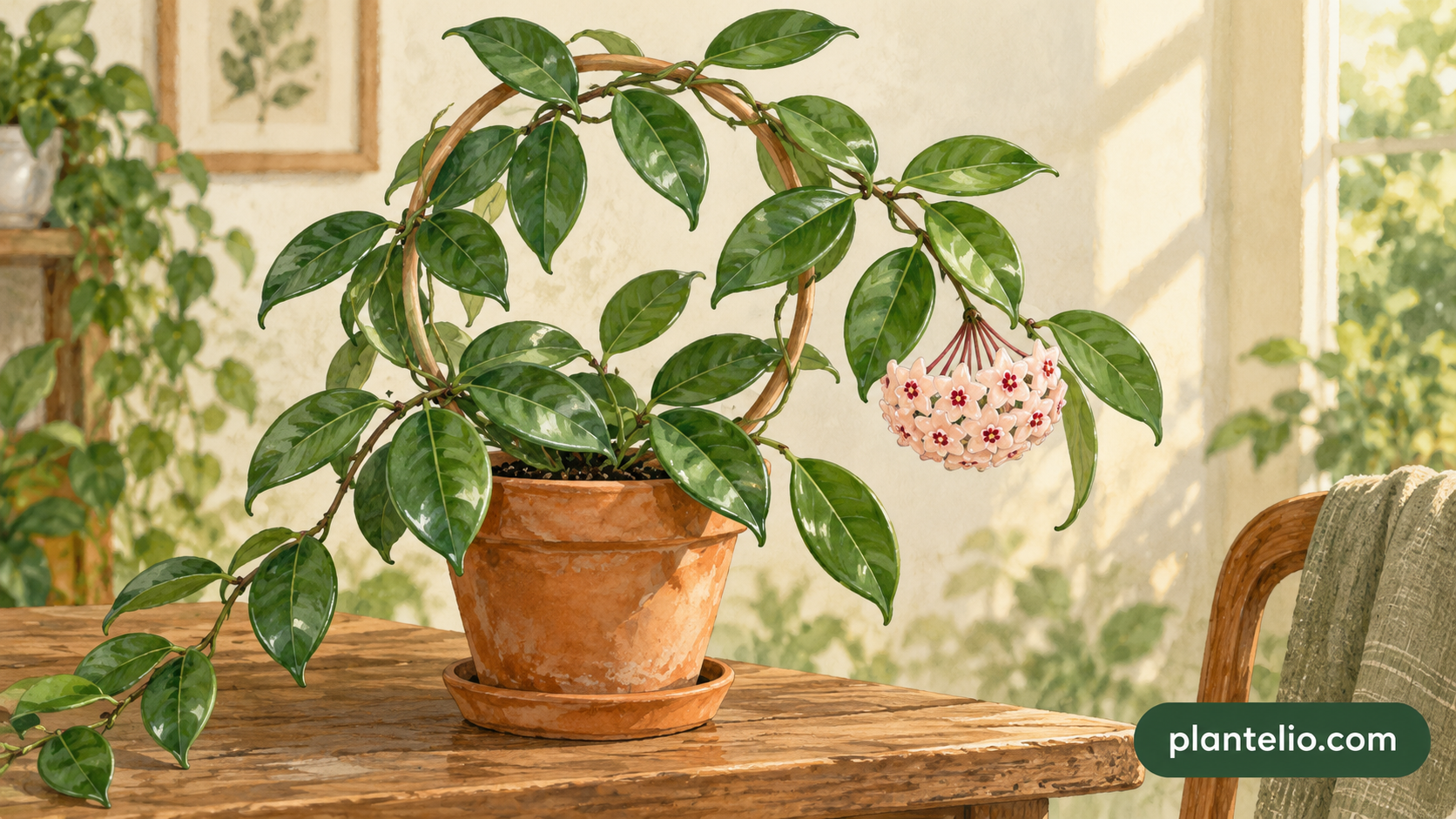
Hoya Carnosa Care: Light, Watering and Flower Spurs
Hoya carnosa care includes one detail that is easy to miss when tidying a vine: the little spur that held a flower cluster may still be useful. Before cutting or repotting, identify what you are looking at and decide whether the plant actually needs that intervention. A healthy-looking vine does not need a new project every time you inspect it.
Give the vine an appropriate home
NC State Extension’s Hoya carnosa profile recommends bright indirect light, a loose, fast-draining growing medium and a container with good drainage. It describes a climbing plant with thick, waxy leaves.
Choose a place that accommodates the vine as well as the pot. Check that you can reach the growing medium without pulling stems out of the way. Use our indirect-light guide to describe the actual position rather than relying on the room’s overall brightness.
Allow drying without making neglect the goal
NC State advises allowing the medium to dry between waterings, while warning that both excessively wet and excessively dry conditions can cause leaf drop. Thick leaves do not remove the need to inspect the pot.
Use our soil-moisture checking guide before watering. Compare the current observation with the last one. If your notes only say “watered,” add what prompted the decision so you can learn how this particular container behaves.
Leave old flowering spurs in place
The short flowering stalk, or peduncle, can produce blooms again over several years. NC State advises against cutting it off after flowering. Before tidying a spent cluster, distinguish the old flowers from the structure supporting them.
If you are unsure, take a close photograph and compare it with a reliable botanical reference before making a cut. Mark that photograph in your care notes. It is easier to postpone an uncertain cut than to put the removed structure back.
Make repotting a separate decision
NC State recommends repotting when the plant outgrows its container and is not in bud or flower; it notes that Hoya tolerates a snug pot. A flowering plant is not automatically asking for a larger container.
Write down the reason for any proposed change before acting. If the concern is simply that your plant has not flowered yet, record its known age, location and growth history. Keep the immediate task clear: assess the conditions, preserve useful structures and avoid treating a bloom photograph as a deadline your own plant must meet.










Post Comment