Goldfish Plant Care: Filtered Light and a Draining Pot
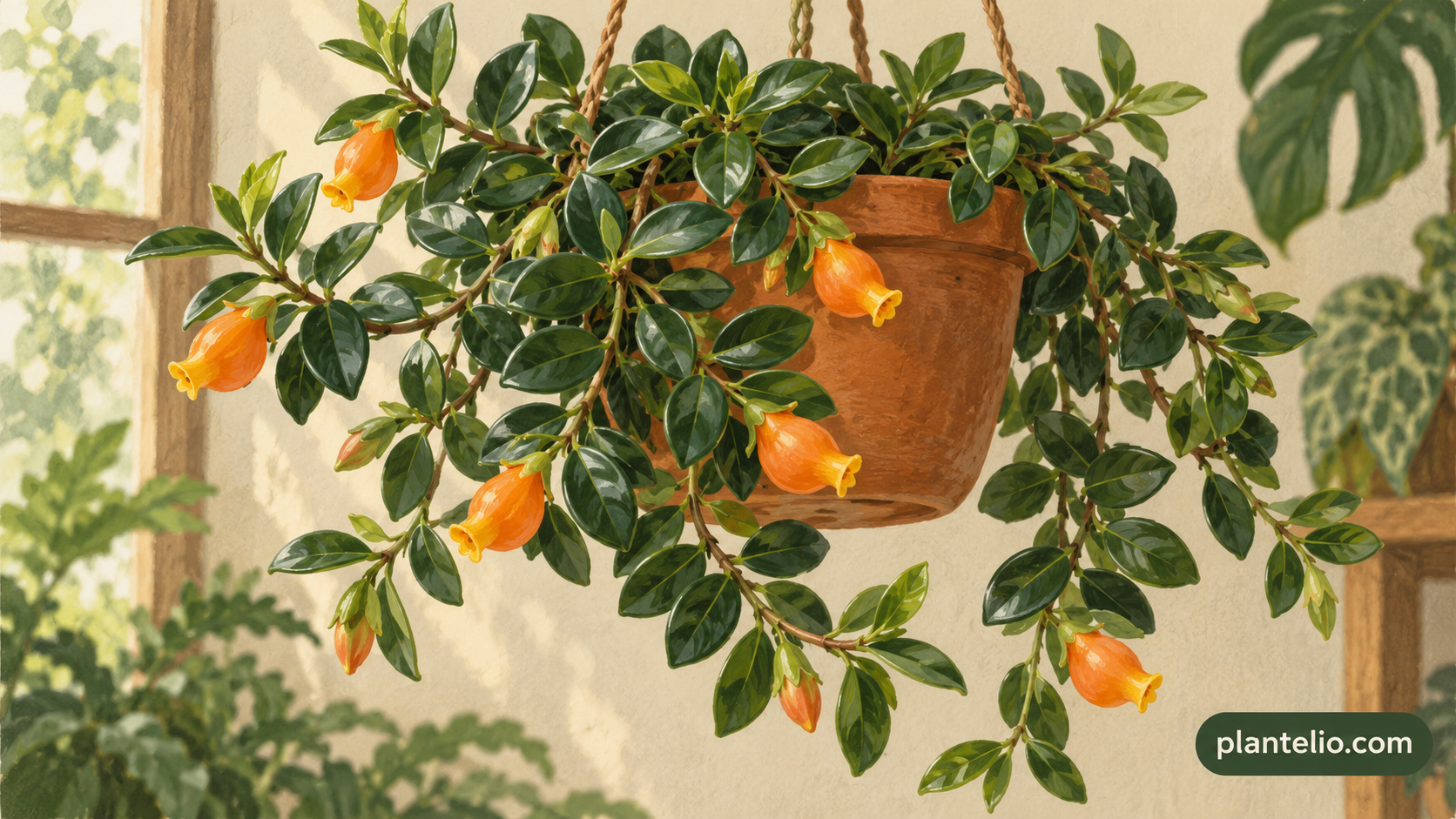
Goldfish plant care starts with checking the botanical name on the label. This guide covers Nematanthus gregarius, a trailing plant with glossy leaves and orange, pouch-shaped flowers. Keep that name with your care notes so advice for another plant sold under a similar common name does not get mixed into the routine.
Choose filtered light
The RHS recommends bright, filtered light for this species. Its fleshy, dark green leaves and inflated orange flowers make it suitable for a display where the trailing stems remain visible. The plant is also known as clog plant.
Before fixing a hanging position, use our bright indirect light guide to assess light at the pot itself. Check whether the ceiling or a nearby shelf shades the upper growth. Choose a position you can reach for watering and inspection.
Keep the medium open and draining
UC Agriculture and Natural Resources describes this Brazilian plant as an epiphyte and recommends a light, porous, well-draining medium. Its article advises watering thoroughly when dry. The RHS describes moist but well-drained conditions and recommends peat-free potting compost.
In practice, inspect moisture before watering rather than assigning a fixed weekly day. Check the mix, water when needed and let the pot drain. If the plant sits inside a decorative cover, lift the inner pot so you can see whether water has collected below it.
Keep flower expectations realistic
The RHS describes summer flowers, sometimes in small clusters. A flowering shop plant is therefore not a promise of uninterrupted blooms at home. Photograph the flowers and keep the purchase date so you have a reference for your own plant’s cycle.
If flowering pauses, write down its location and recent care before changing several things at once. This will make any advice you seek more specific than simply reporting that the plant has stopped flowering.
Check new shoots
The RHS says pinching young shoot tips can encourage branching, although routine pruning is not essential. It also highlights aphids on young growth as a possible pest.
During moisture checks, look at the newest shoots and the underside of nearby leaves. Keep a clear photograph of anything unusual. Plan any trimming around the shape you want, rather than cutting every trailing stem to the same length.
Sources: RHS: Nematanthus gregarius; UC ANR: Goldfish plant.










Post Comment