Grape Ivy Care: Training a Vine Without Overwatering
Grape ivy care is easier when you plan for a climbing vine rather than a compact tabletop plant. Cissus alata, also sold as Cissus rhombifolia, can trail from a basket or grow on a support. Its common name alone is not a reliable guide to its identity.
Recognize the leaves and tendrils
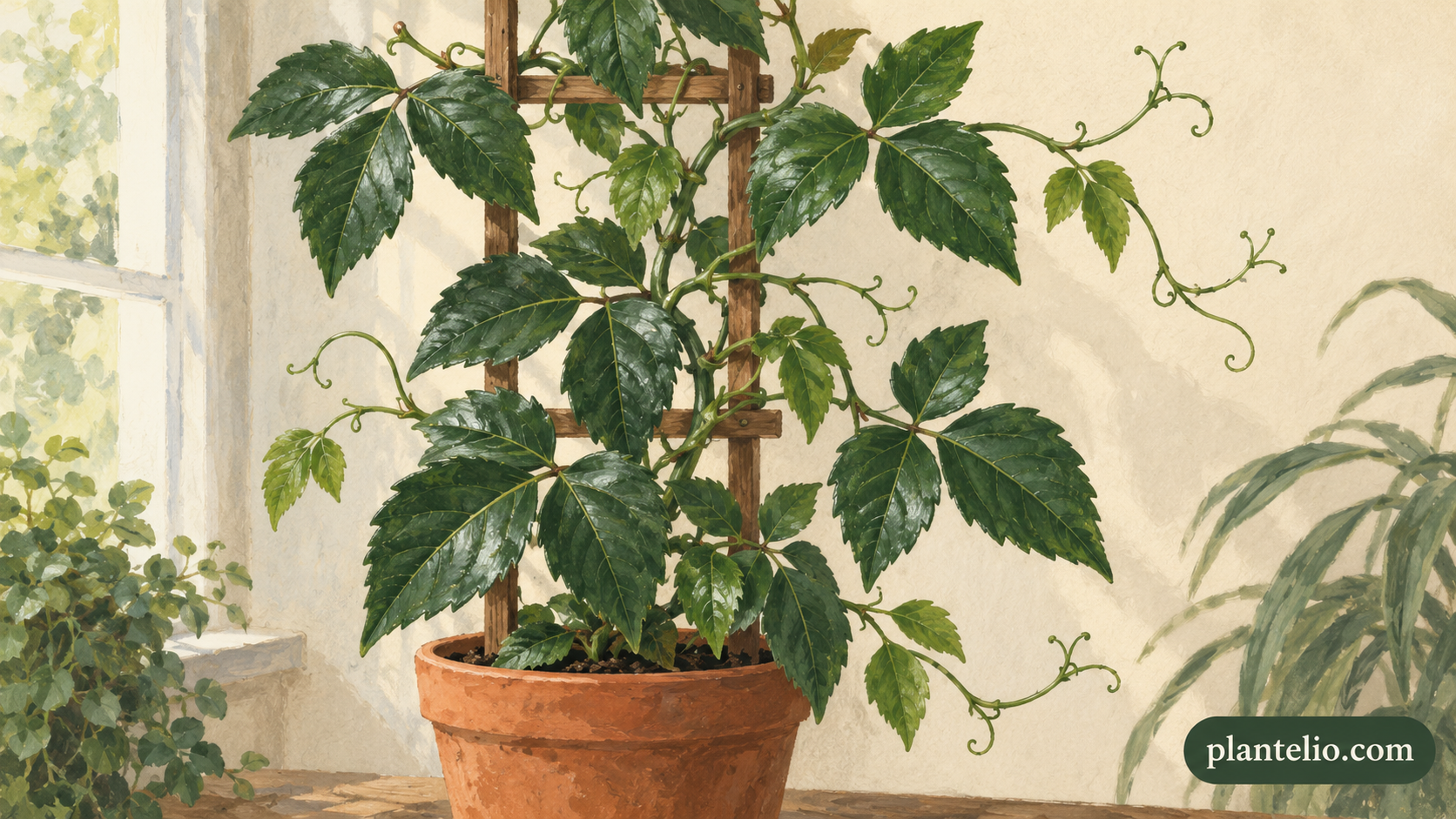
NC State describes shiny, toothed leaflets and a forked tendril opposite the three-part leaf. Look at a complete leaf and its attachment, not just a single leaflet. Keeping the botanical name with the pot makes future care searches more useful.
RHS describes an evergreen tendril climber capable of reaching about 3m. That is a growth habit to plan for, not a promise that a small indoor plant will reach that size on a particular schedule.
Choose light and a display together
RHS recommends bright, filtered light for indoor cultivation. Use our bright indirect light guide to assess the actual position. A support should fit where the plant receives suitable light, rather than forcing the plant into an unsuitable corner.
NC State lists both trellises and hanging baskets as suitable displays. Decide which form you want before long stems become tangled with nearby plants. Leave a clear route to the pot so watering checks remain straightforward.
Check before responding to leaf drop
NC State warns that leaves can fall when the plant is either too wet or too dry. Leaf drop therefore does not identify the direction of the watering problem. Check the mix using our soil moisture routine before adding more water.
RHS recommends a peat-free, loam-based compost and sparing winter watering. Record what the mix feels like when you inspect it. This is more useful than repeatedly watering because another leaf has fallen.
Inspect the whole vine
RHS lists spider mites, whitefly and mealybugs as possible pests. Inspect several leaves and stems when growth changes; a single damaged leaf rarely provides the whole story.
Keep a simple photograph of the plant and support at the start of the month. Later comparisons can show which stems have extended and where the display needs attention. Separate observations about growth, moisture and insects instead of assuming every change has one cause.
Sources: NC State Extension: grape ivy; RHS: Cissus rhombifolia.










Post Comment