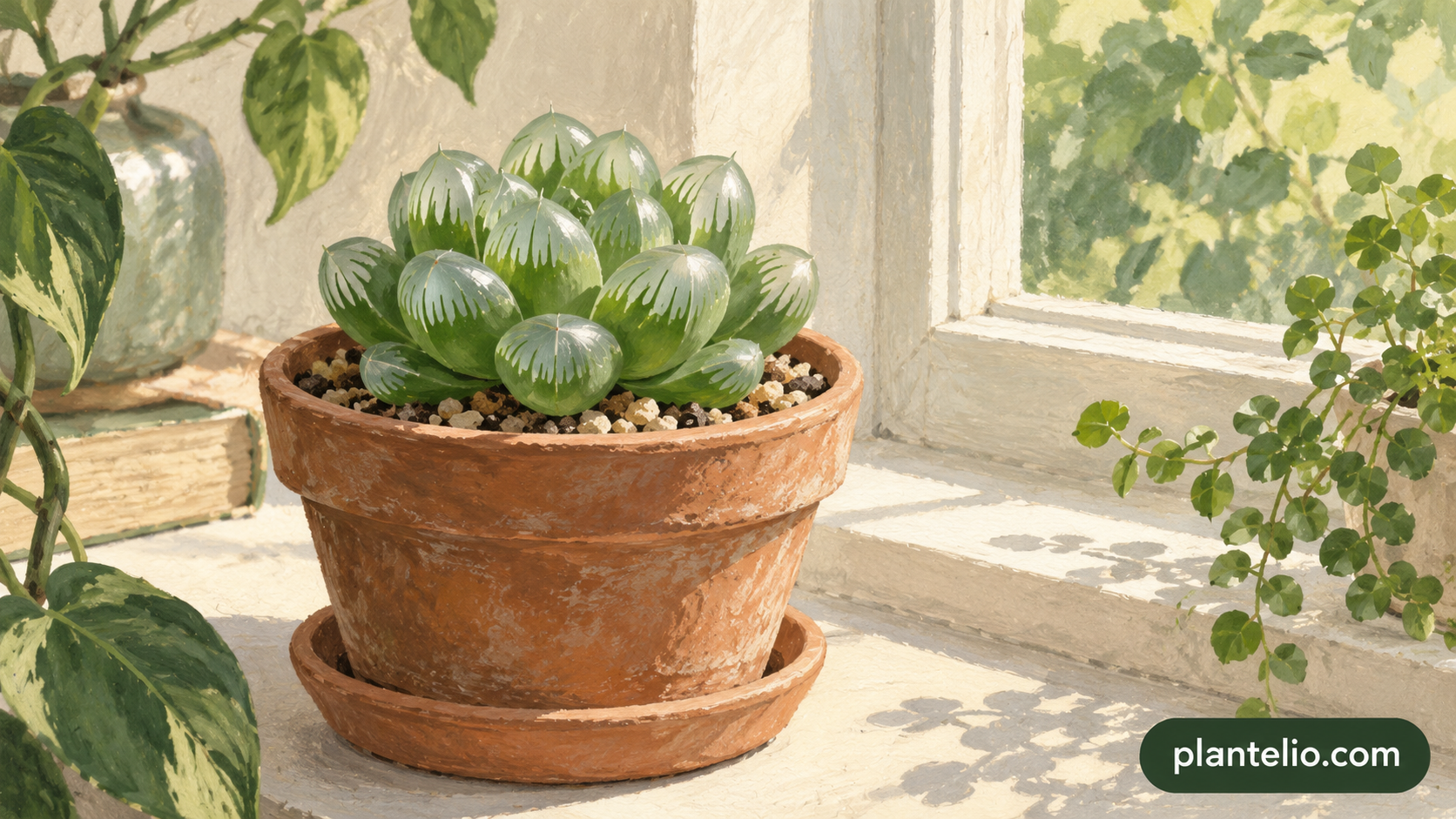
Haworthia Care: Bright Light Without Harsh Sun
Haworthia care starts with a small pot and a bright position that does not scorch the leaves. These compact succulents suit windowsills, but treating them like sun-loving desert cacti can cause trouble. Identify your plant where possible, because the group includes different leaf shapes and growth patterns.
Choose light you can observe
Wisconsin Extension recommends bright, indirect light, with some direct sun possible at east- or west-facing windows. Strong southern exposure may need filtering. Plants moved outdoors need a gradual introduction to brighter conditions. A stretched rosette can be a clue that the position is too dim.
Use our guide to recognizing bright indirect light at home to assess the actual shelf. Note when sunshine reaches the pot, rather than relying only on the window direction. Take a photograph before moving the plant so you have a useful comparison later.
Let the mix dry between waterings
Allow the potting mix to dry between drinks. Wisconsin Extension warns that wet conditions become particularly risky when light is poor, temperatures are low or growth is inactive. A pot only modestly larger than the roots makes more sense than a large container filled with unused wet mix.
Before adding water, check soil moisture below the surface. Record the result as well as the date. A reminder can prompt an inspection; it should not automatically trigger another watering.
Match the routine to your plant
The RHS describes haworthias as compact plants for bright, indirect light and recommends a cactus compost. Keep them frost-free. Its guide includes plants with translucent leaf tips, such as Haworthia cooperi, alongside other forms.
Do not assume every haworthia follows one fixed summer or winter rest period. Wisconsin Extension notes differences linked to native rainfall patterns. Observe new growth and drying speed, then adjust your checks accordingly.
A simple windowsill record
- Keep the plant label with the pot.
- Write down the position and last watering date.
- Photograph the rosette from the same angle each month.
- Record any move before making another change.
This record will not diagnose every problem, but it makes changes easier to explain. Bring the label and photographs when asking a nursery for help.
Sources: Wisconsin Extension: Haworthias; RHS: Haworthia.










Post Comment