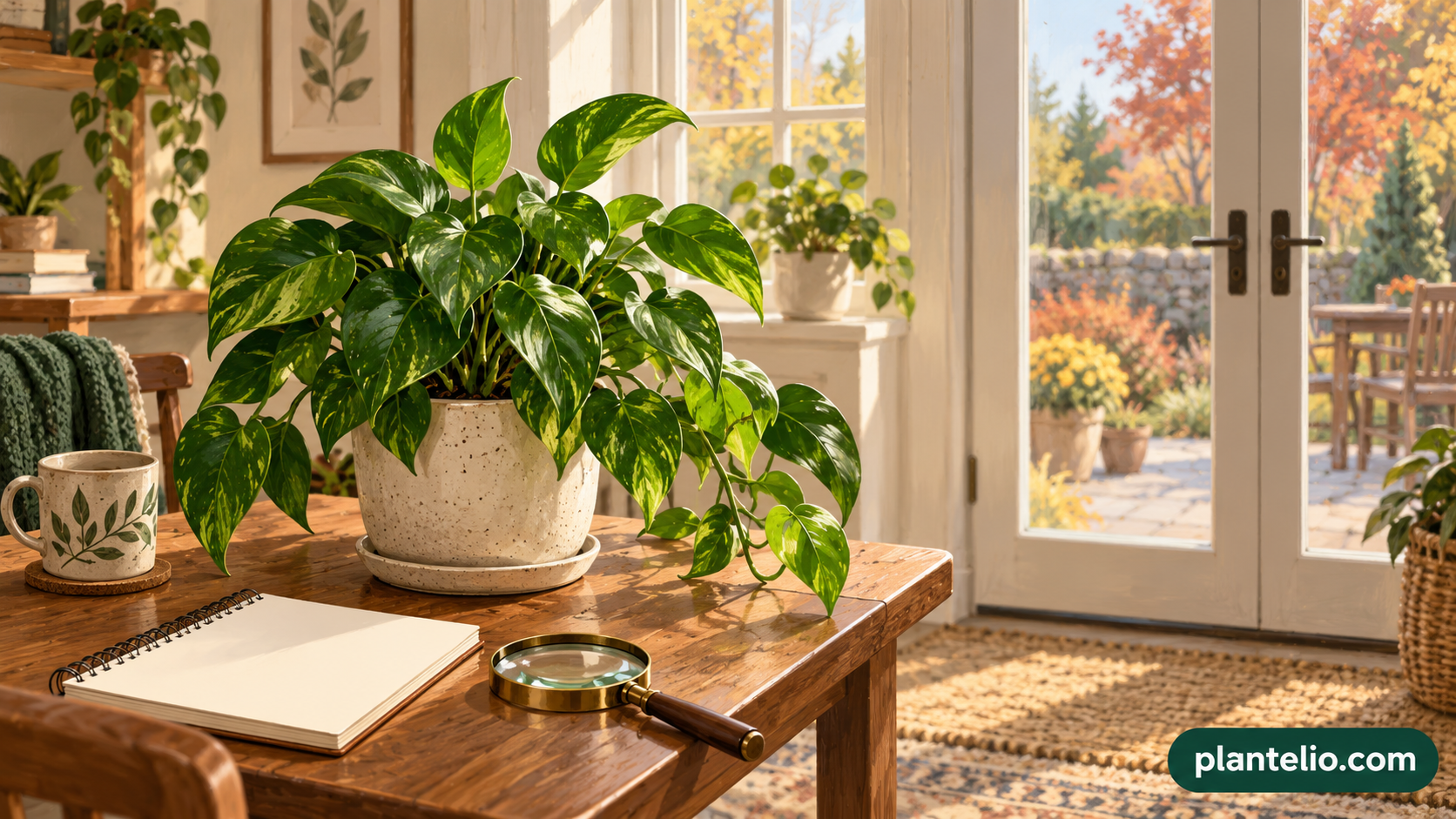
Choosing an Indoor Spot for a Houseplant Returning from Outside
Before a houseplant comes back from a balcony or patio, decide where it will spend its first days indoors. An empty corner is not automatically a suitable home. The useful question is whether you can provide appropriate light, inspect the plant and manage watering there.
Reserve a place you can inspect
The University of Minnesota’s guide to bringing houseplants indoors recommends checking plants for pests and keeping returning plants separate from the existing collection. Make room for that step before placing a pot among your other plants.
Choose a spot where you can see both sides of the leaves and reach the pot without moving several other plants. Our houseplant pest inspection guide provides a closer-check routine. An attractive display is easier to arrange after inspection than to dismantle when a problem appears.
Compare two real locations
Write down two possible positions, such as a spare-room table and a living-room shelf. For each, note window access, periods of direct sun, space for the full plant and how easily you can check drainage. Observe the locations during the day rather than choosing from one evening glance.
Consider the plant’s species and previous growing conditions. A plant accustomed to strong outdoor light may need a much brighter indoor location than the first available shelf. Our bright indirect light guide helps describe a location more precisely than simply calling the whole room sunny.
Prepare before cold weather forces the move
Iowa State Extension advises watching nighttime temperatures when deciding when to bring houseplants inside. Many tropical houseplants are sensitive to cool conditions; do not wait for a frost warning, and check the requirements of your particular plant.
Put a waterproof saucer beneath the pot and make sure you can remove collected water. Photograph the plant when it arrives and note the chosen position. That simple baseline helps distinguish an old damaged leaf from a new change. Recheck the plant and growing mix over the following days; avoid treating the outdoor watering schedule as an indoor instruction.










Post Comment