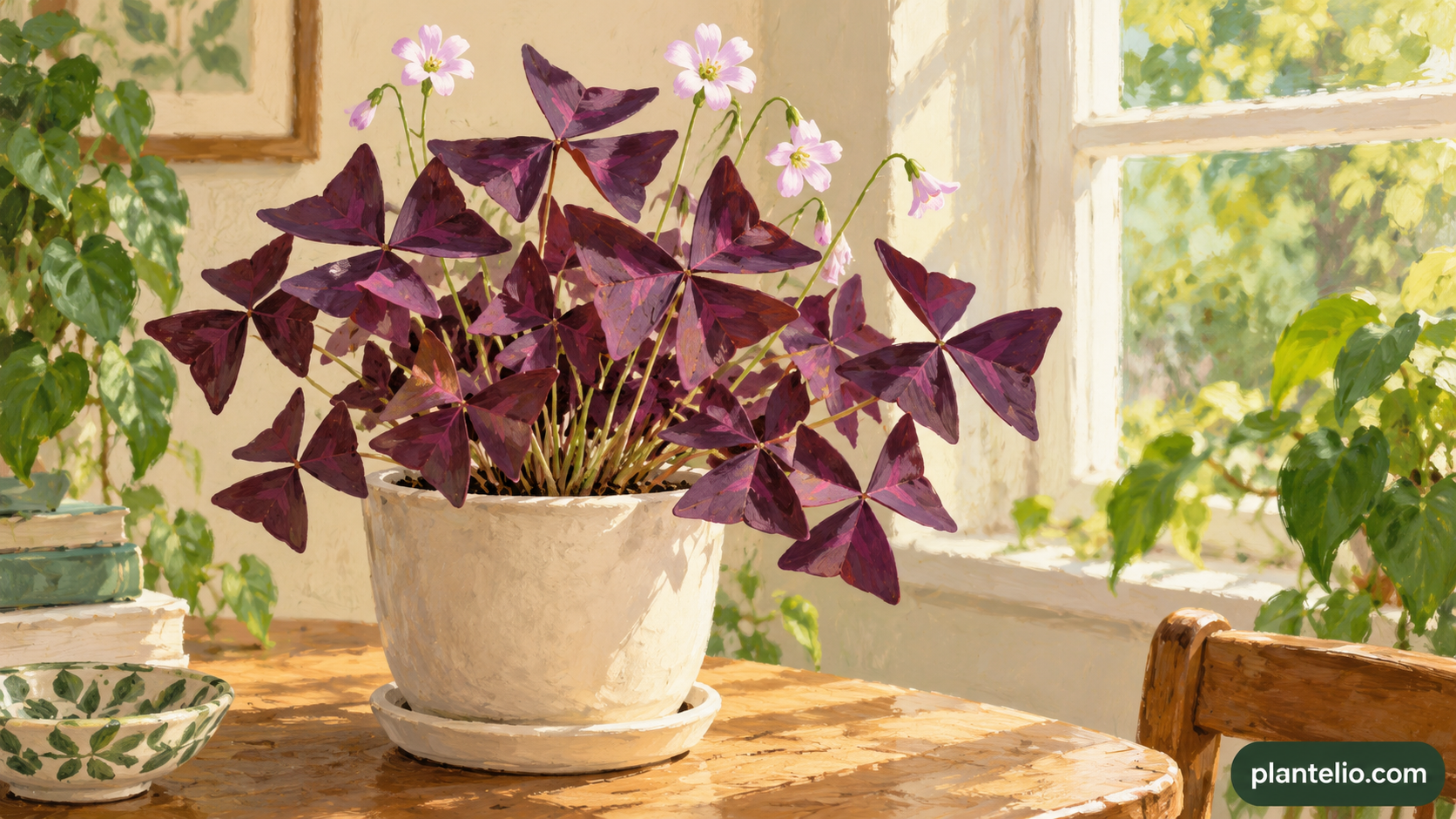
Purple Shamrock Care: Watering, Folding Leaves and Rest
Purple shamrock care is easier when you recognize the difference between daily leaf movement and a longer rest period. Oxalis triangularis has leaves made of three triangular leaflets, often deep purple. Its changing appearance does not always call for more water.
Confirm the plant and choose a bright position
NC State identifies this South American species as a rhizomatous perennial. It grows from underground storage structures and is unrelated to true clover, despite the common name. Wisconsin Extension recommends bright indoor light and relatively cool conditions for ornamental shamrock plants.
Assess your window using our indoor light guide. Keep the label with the pot: green and purple Oxalis can look different, and the word “shamrock” alone does not identify a species.
Check the surface before watering
NC State recommends a well-drained potting mix and allowing the surface to dry between waterings. Wisconsin advises barely moist rather than wet soil, with feeding only while the plant is actively growing.
Use our soil moisture checking routine to decide what the pot needs. Write down whether the plant is producing new leaves as well as whether the mix is moist. These two observations help you avoid repeating the same routine after growth has slowed.
Understand folded leaves
NC State notes that the leaflets close at night or when disturbed. Wisconsin also describes nighttime folding in ornamental Oxalis. Check the plant again during the day before interpreting an evening change in shape as sudden decline.
Take comparison photos at the same time of day. If you are asking someone to assess a change, mention when each photograph was taken. A morning image and a late-night image may show normal movement rather than a new problem.
Respond carefully to a rest period
NC State says purple shamrock may become dormant in autumn or when conditions are too hot or dry. Reduce watering during dormancy and watch for renewed growth. A resting pot should not receive the same watering routine as a leafy, actively growing specimen.
Record when foliage began declining and what changed in its surroundings. Do not assume every sudden collapse is dormancy; inspect the mix and the remaining growth before deciding what happened. Keep this ornamental plant out of reach of pets that chew leaves, as NC State flags toxic potential.
Sources: NC State Extension: Oxalis triangularis; Wisconsin Extension: ornamental shamrocks.










Post Comment