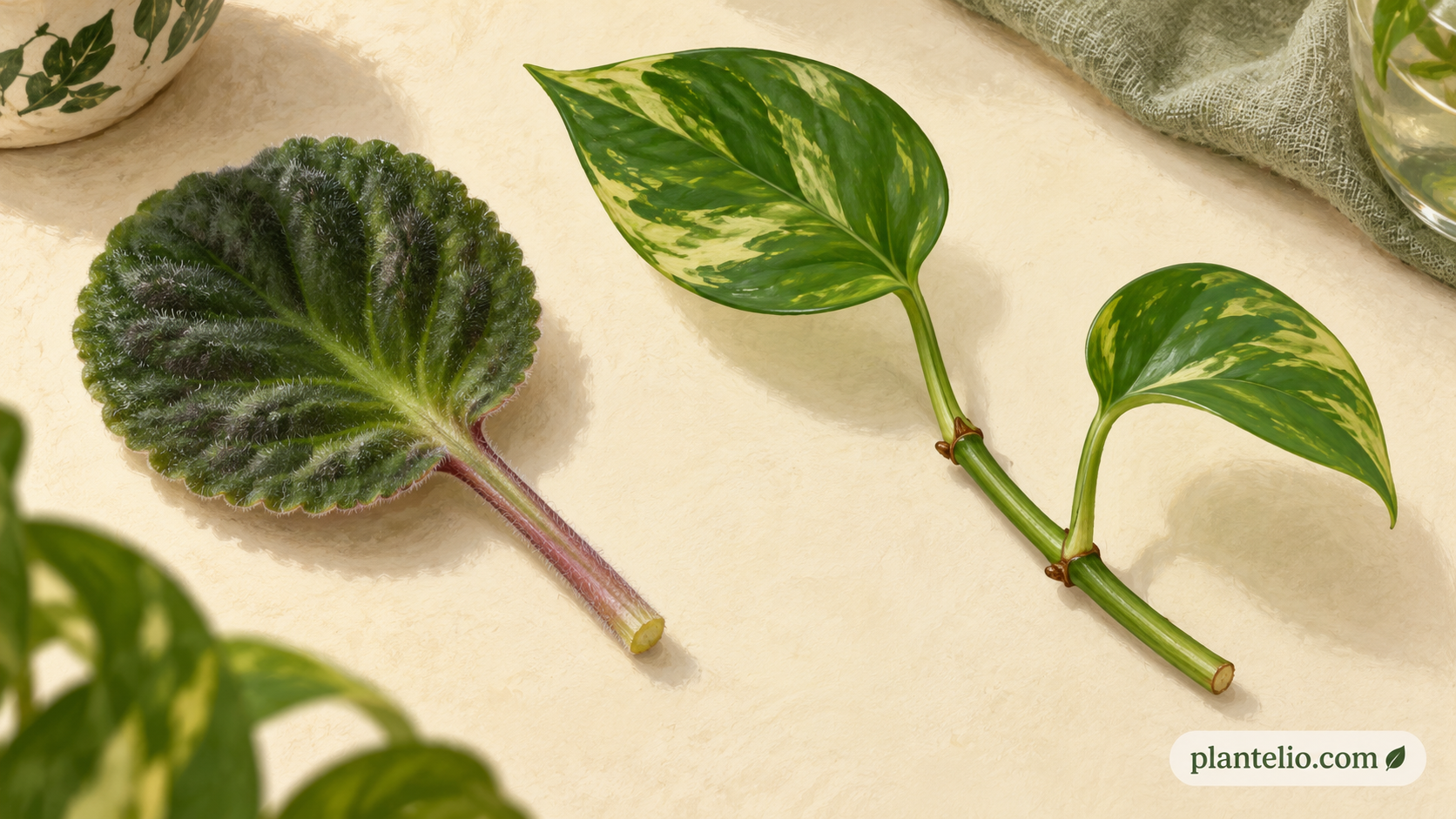
Leaf Cutting vs Stem Cutting: Why Plant Identity Matters
A leaf with a stalk attached can look like a small stem cutting, but the two are not the same plant part. Before placing either one in water or growing medium, identify the plant and the type of cutting its propagation method requires.
Identify what is attached to the leaf
A leaf cutting may consist of a leaf blade and its stalk, called a petiole. A stem cutting includes part of the plant’s stem, usually with leaves attached. The Illinois Extension cuttings guide describes a node as the point where a leaf emerges from the stem.
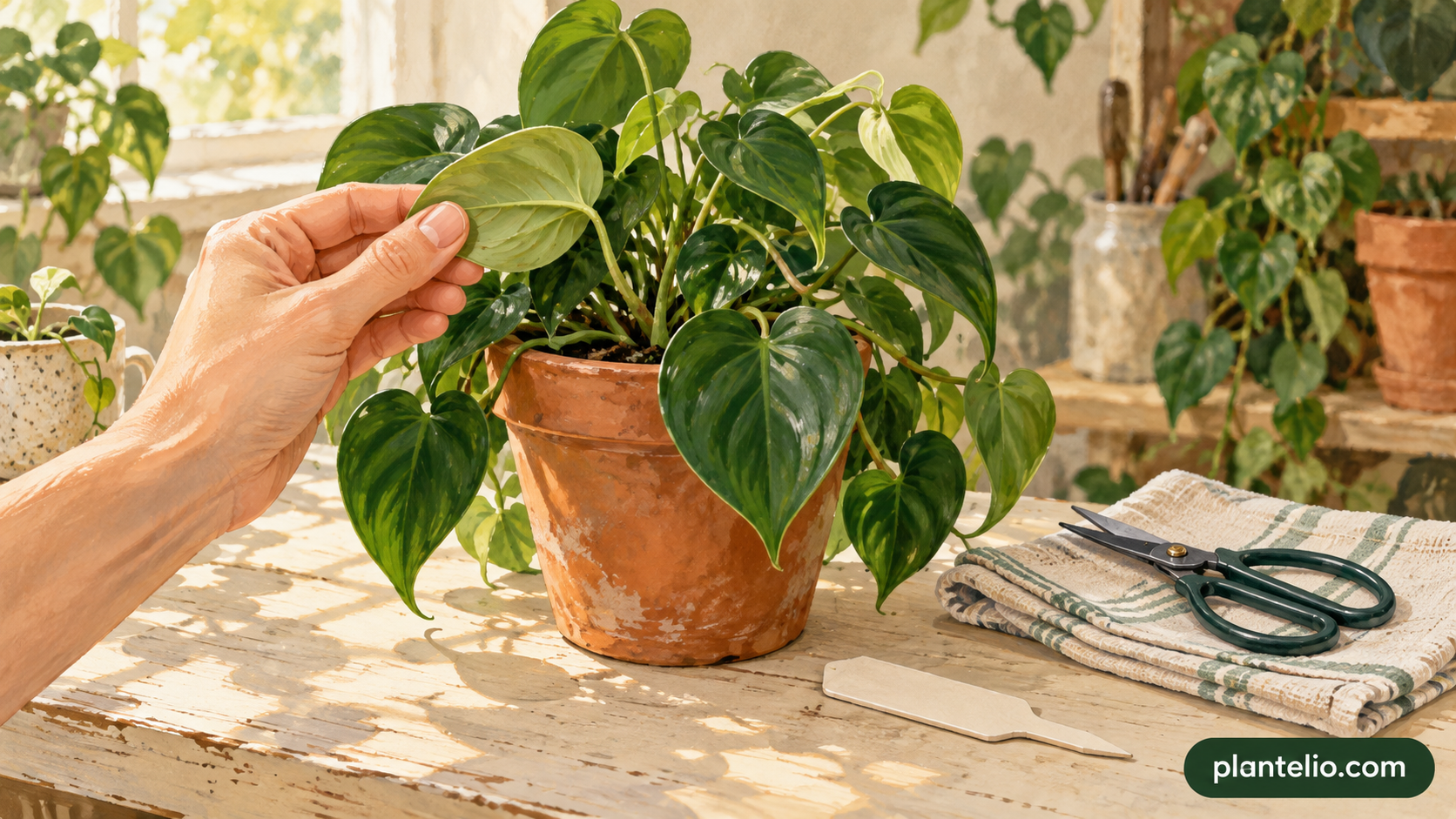
Trace the leaf stalk back to its attachment before making a cut. A long petiole is not automatically a section of stem. If you cannot distinguish the parts, compare the intact plant with a reliable species-specific illustration before removing anything.
Match the method to the species
Illinois lists African violets among plants that can produce new plants from leaf cuttings. Pothos is commonly propagated from stem material. These examples explain why a successful technique for one plant may be unsuitable for another.
The university’s propagation overview also notes that some leaves can form roots without developing new stems and leaves. Roots alone therefore do not prove that an unfamiliar leaf cutting will become a complete plant.
Check three things before cutting
- Identity: confirm the plant’s name instead of relying on a broad label such as “foliage plant.” Our plant-label checklist explains which information to keep.
- Required part: establish whether the method uses a leaf, a stem section, division or another structure.
- Condition: choose suitable, healthy material and inspect the parent plant before sharing or propagating it.
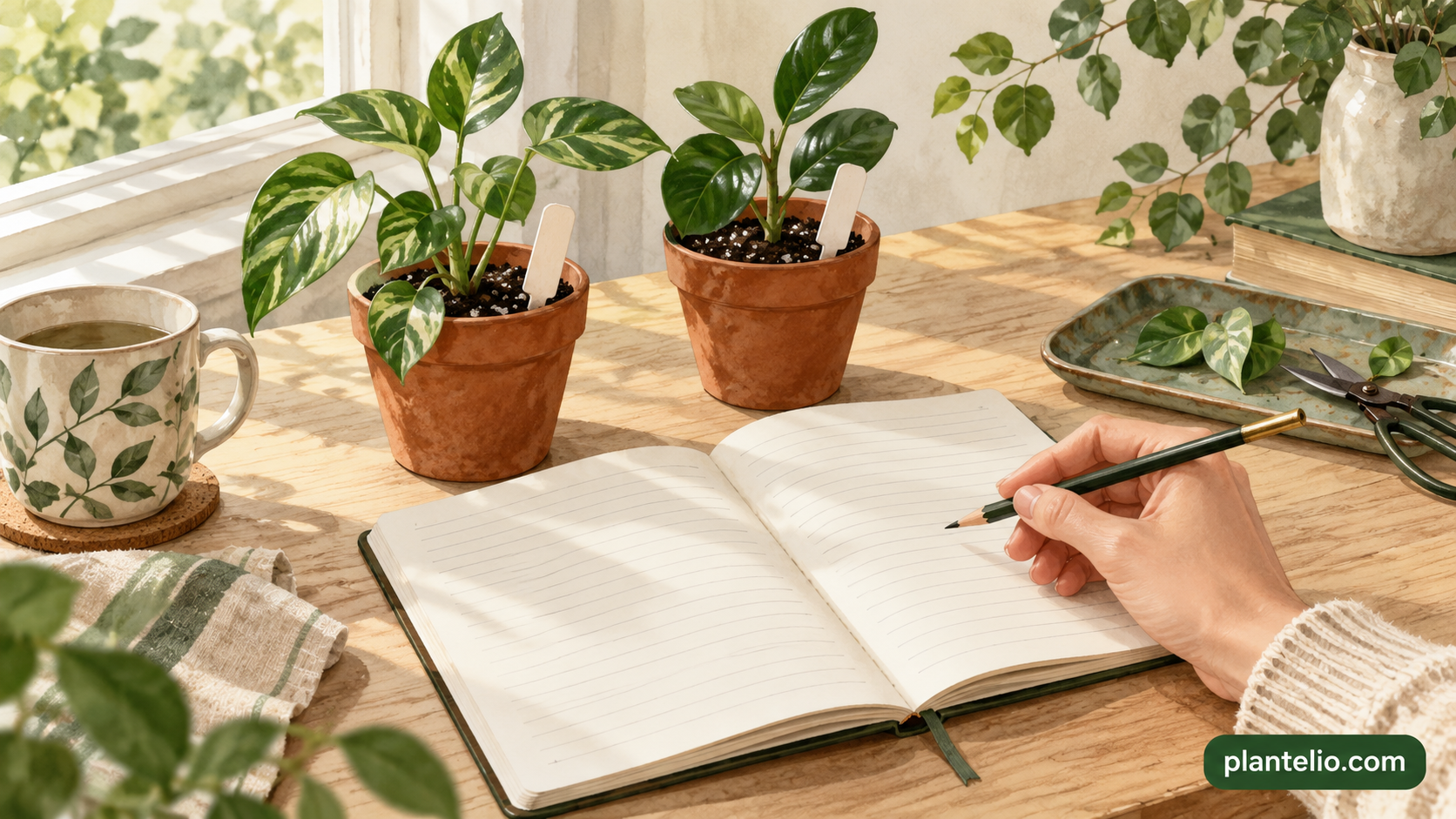
Write the method beside the plant’s name before preparing the container. This small step prevents two different experiments from being mixed together on the same windowsill.
Use a complete propagation guide for the next step
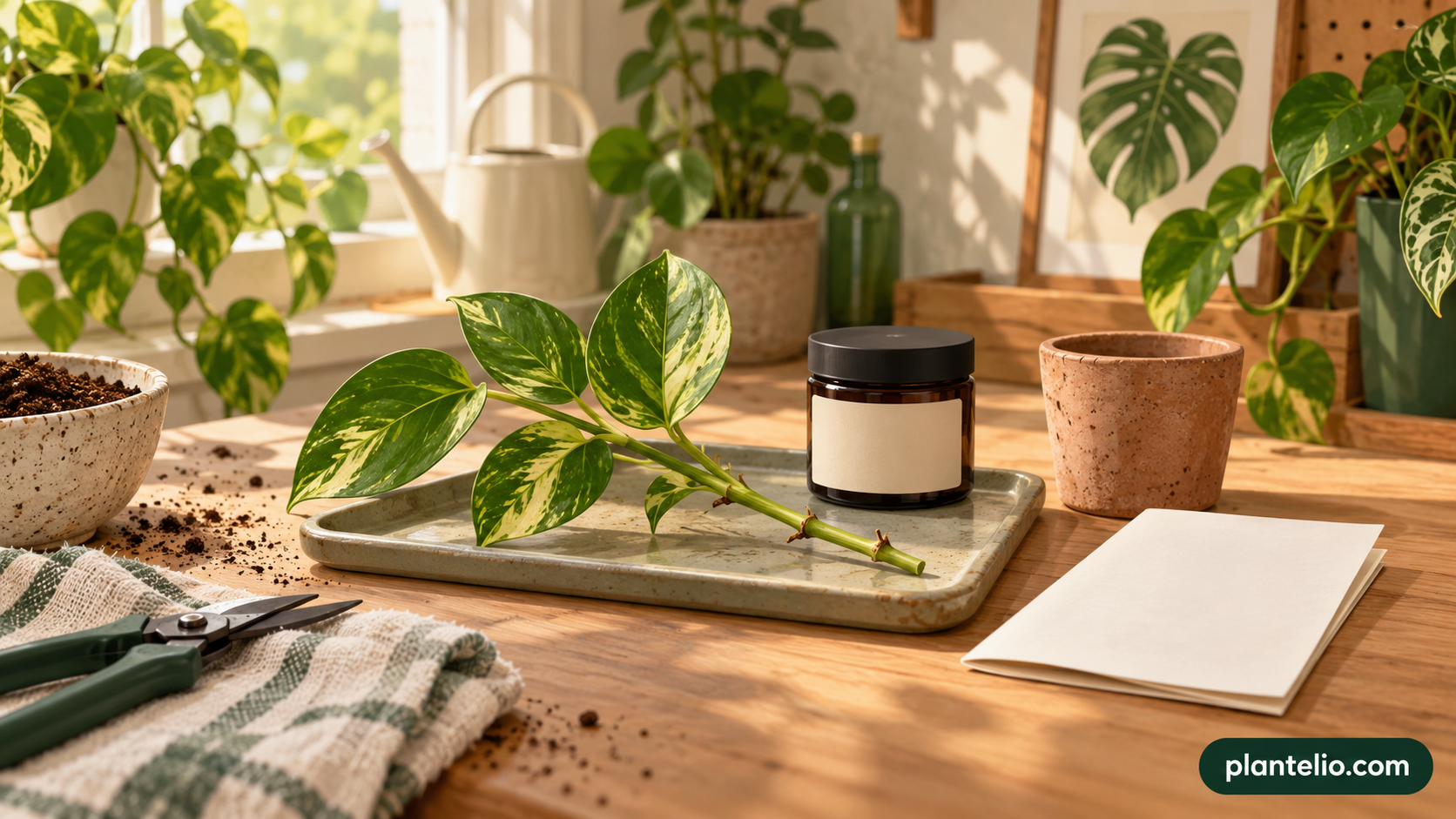
Recognizing the cutting type is only the starting point. Cutting length, node requirements, rooting medium and aftercare depend on the plant and technique. Follow a species-specific guide rather than treating this comparison as a universal cutting recipe.
Photograph the original plant and the selected material, then label the propagation container. If development stalls, those records help you check whether the correct plant part was used before changing every other condition.










1 comment