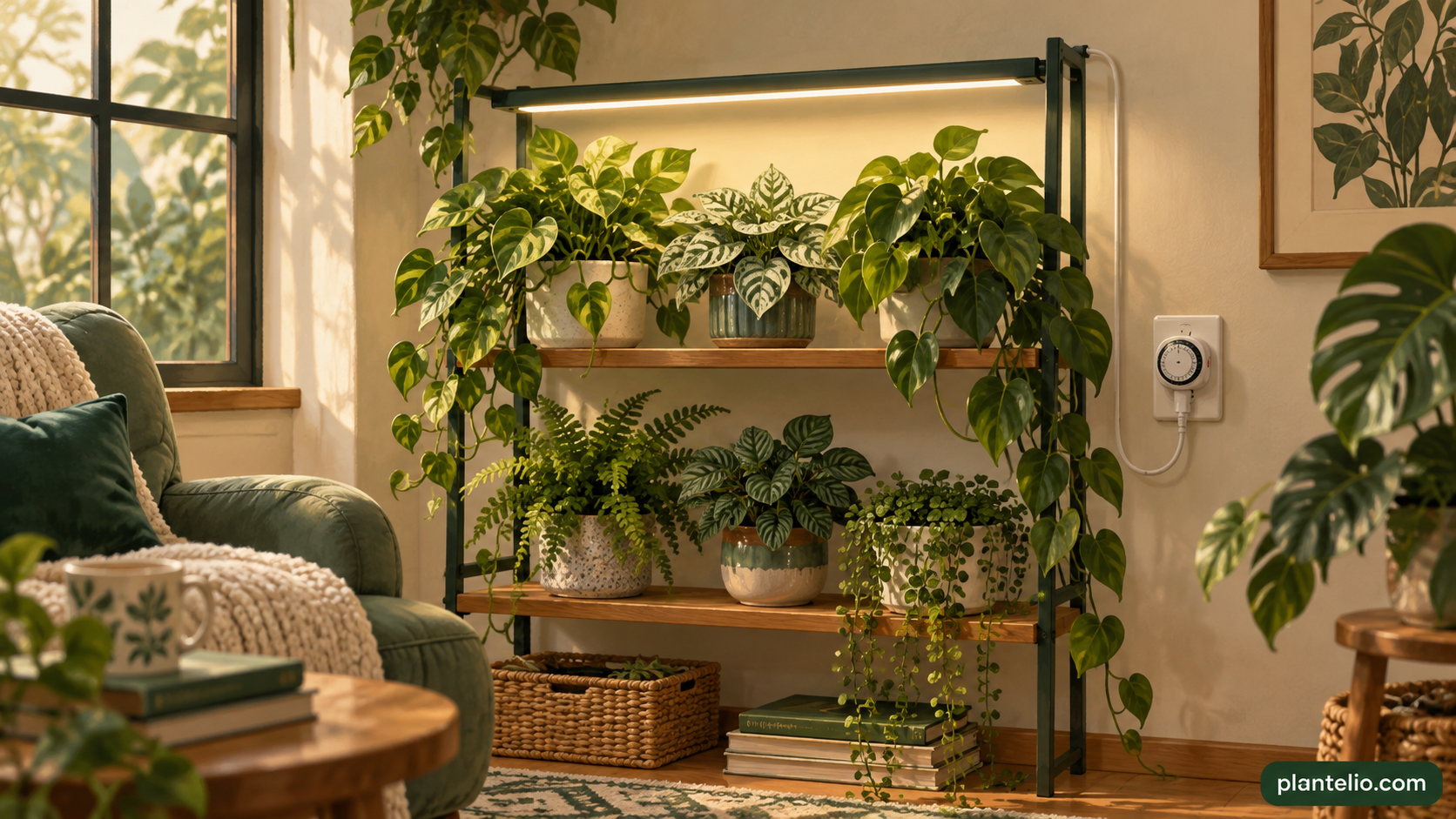
How to Set a Grow Light Timer for Houseplants
A grow light timer makes a lighting routine repeatable. The useful part is not simply choosing an on-time: it is checking that the lamp follows the program and that the schedule fits the plant and its surroundings.
Choose the schedule before programming
Iowa State University Extension’s supplemental-light guide gives 12 to 14 hours as a useful general range for many species and emphasizes a daily dark period. This is a starting point, not a flowering recipe for every plant. Species with particular day-length requirements need their own schedule.
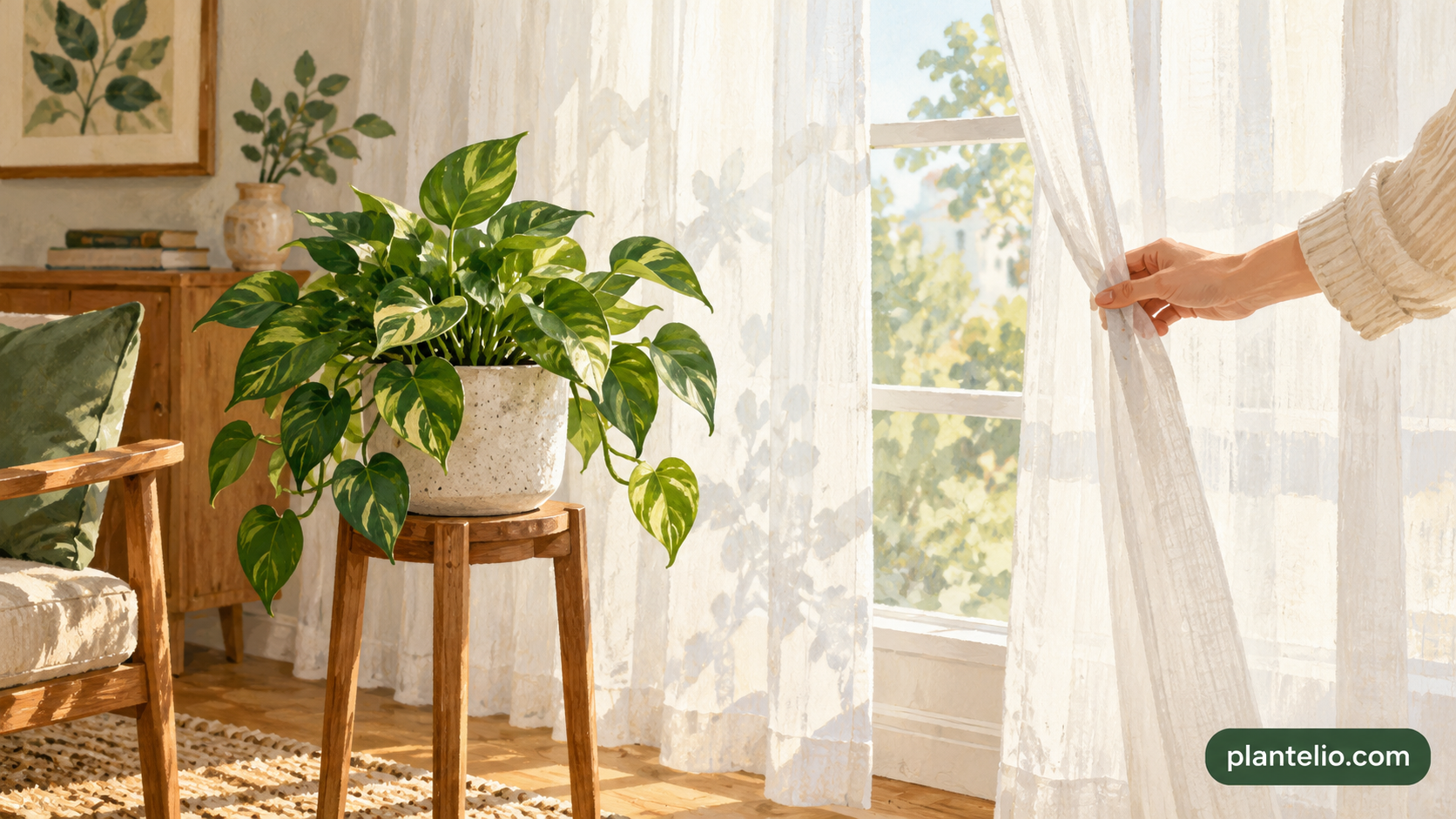
A timer controls duration, not the intensity reaching the leaves. Before extending the day, review the plant’s position and the light already available. Our guide to bright indirect light at home can help you describe the window conditions alongside your lamp.
Write down one clear on-and-off pair
For an illustrative 12-hour program, 08:00 to 20:00 is easier to check than several scattered periods. Those clock times are an example, not a universal recommendation. Choose times that let you observe at least one transition and suit the plant’s care guidance.
- Check the timer’s clock, including AM/PM or 24-hour format.
- Select the intended days; a weekday-only setting may leave a weekend gap.
- Read the instructions for automatic mode and manual override.
- Keep the lamp and timer within their stated ratings and installation instructions, away from watering spills.
Test what the lamp actually does
Do not assume that an illuminated timer display means the lamp is following it. Observe a programmed switch-on and switch-off. If your device offers a test function, use its manual. A lamp with its own electronic controls may behave differently after power returns; check that behavior before relying on the timer.
After an outage or a clock change, inspect the time and program again. Mark a quick reminder on the calendar if your model does not retain its settings.
Keep a record before changing several things
Record the on/off times, fixture model and position in a plant care log. Note the window exposure too. If growth changes, you will have a usable starting record instead of trying to remember last month’s setup.
Check the whole plant and its care conditions before blaming the timer for a yellow leaf. A reliable schedule makes observation easier; it does not prove that lighting is the only factor affecting growth.











Post Comment