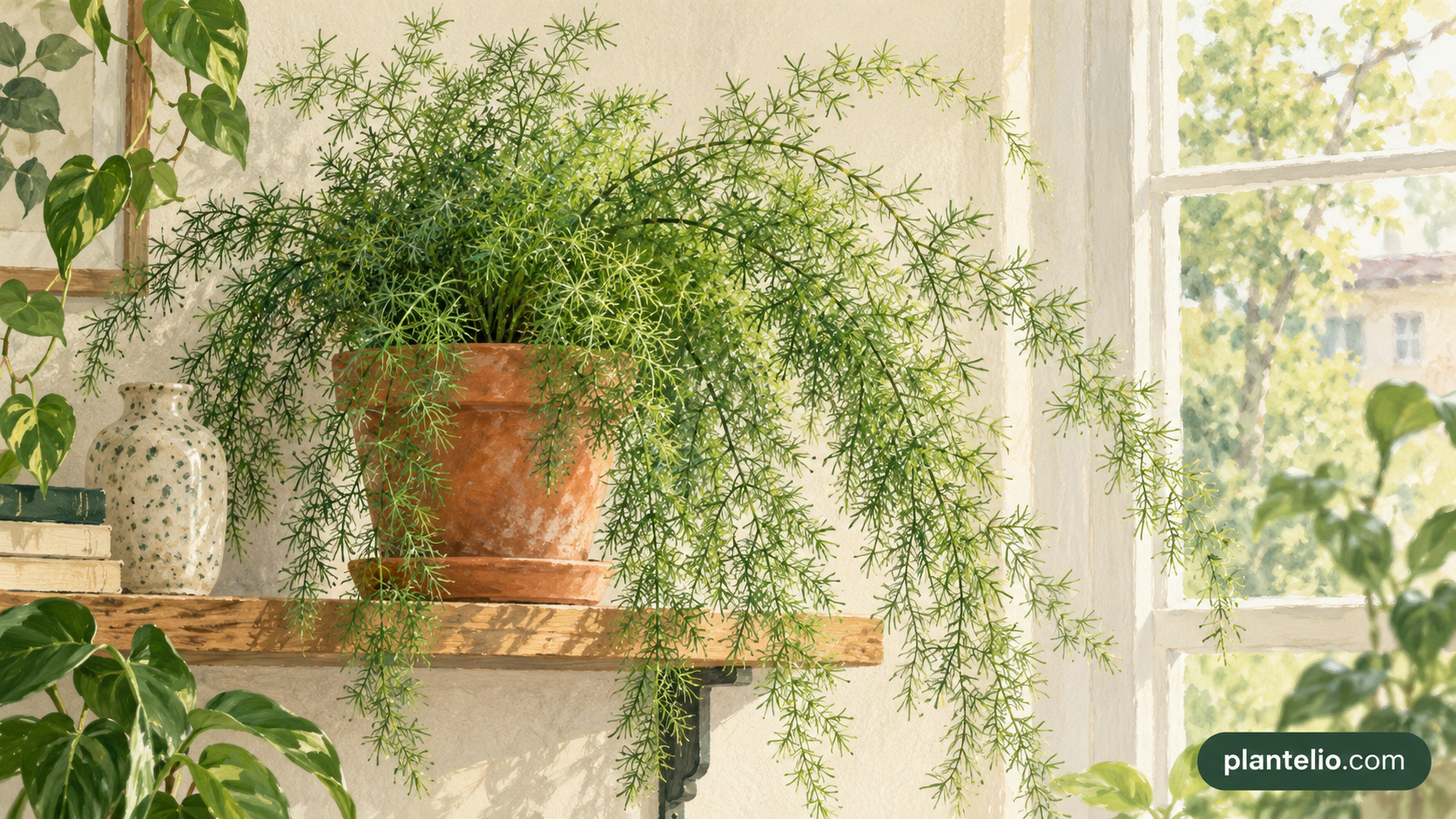
Asparagus Fern Care: Light, Moisture and Room to Grow
Asparagus fern care starts with recognizing that this feathery plant is not a true fern. The ornamental plants sold under this name belong to the asparagus family. This guide focuses on the Asparagus densiflorus types commonly grown in containers, rather than edible garden asparagus.
Check the label and growth habit
Wisconsin Extension distinguishes arching, trailing ‘Sprengeri’ plants from the denser upright plumes of ‘Meyeri’, often called foxtail fern. The fine green structures that resemble leaves are modified stems called cladodes. Do not expect every plant sold as asparagus fern to form the same silhouette.
Keep the original label and photograph the whole plant before choosing its position. Allow space for the growth habit you actually have, especially beside a walkway or a frequently opened curtain.
Give it useful light
Wisconsin Extension recommends direct or bright indirect light indoors. Too little light, or soil that becomes too dry, can lead to yellowing and shedding. A yellow stem therefore does not identify one cause by itself.
Compare the position with our bright indirect light examples. Write down any recent move. Before changing the watering routine, consider whether the plant has also moved farther from a window.
Check moisture and leave drainage open
NC State’s plant notes describe moist, organic, well-drained soil for foxtail fern. Wisconsin Extension similarly favors consistent moisture, with a drier routine in winter. The plant has water-storing tuberous roots, but that does not make prolonged drying the goal.
Check the potting mix before watering and empty collected runoff. Record whether the mix was damp or dry when you inspected it. These observations are more useful than repeatedly adding a small splash because foliage has fallen.
Plan for handling and future growth
Wisconsin Extension notes strong roots that can outgrow containers and sharp spines along the stems. Handle the pot rather than grabbing a handful of foliage. Inspect the container during routine care and plan repotting before it becomes difficult to remove.
NC State notes that flowers may be followed by red berries and that parts are poisonous if eaten. Treat this as an ornamental plant, keep berries away from children and pets, and clear any fallen fruit from the display area.
Sources: Wisconsin Extension: Asparagus fern; NC State Extension: Foxtail fern plant notes.



Post Comment