Baby’s Tears Care: A Small Pot of Fine Green Foliage
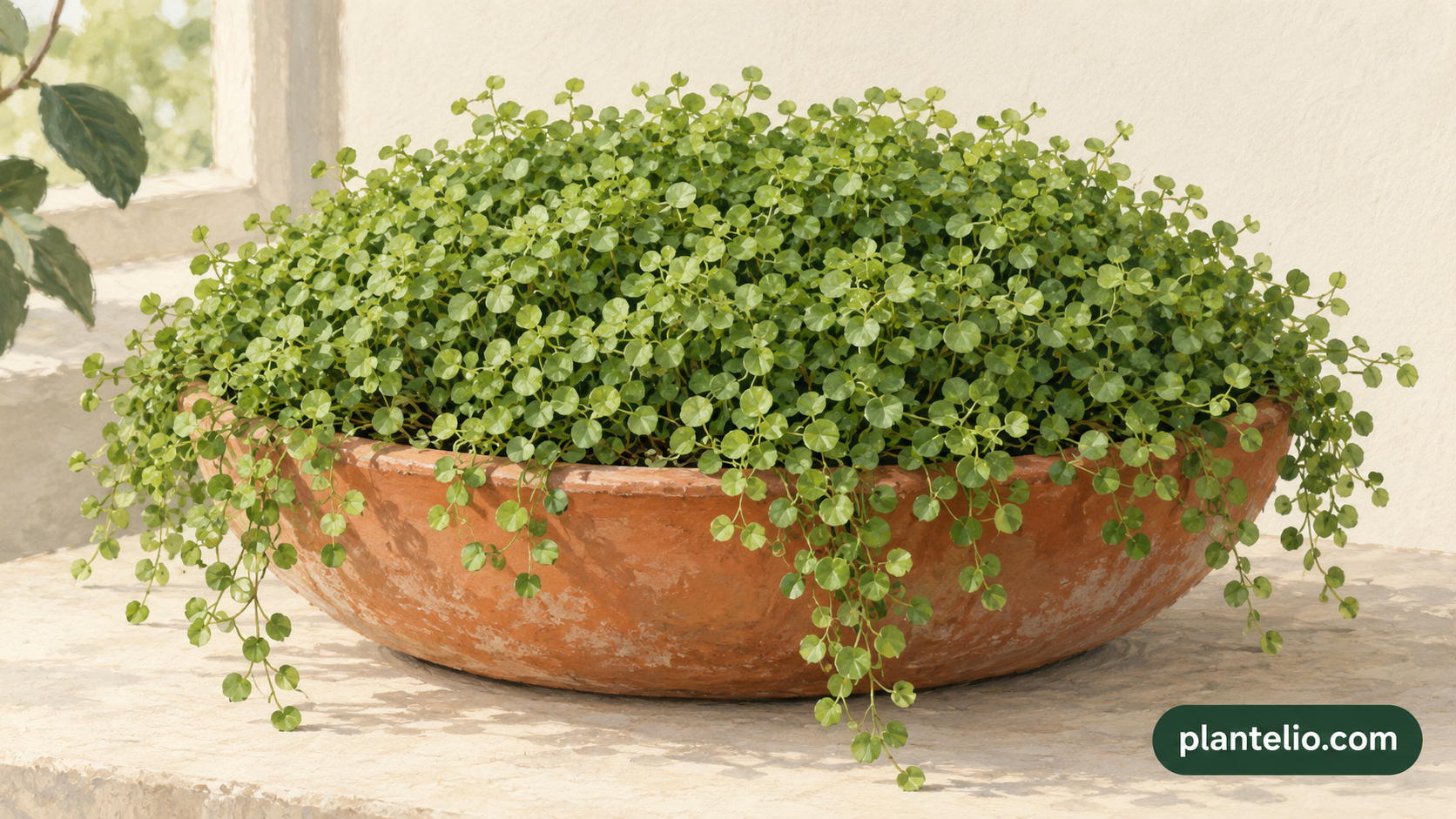
Baby’s tears care begins with identifying Soleirolia soleirolii, a plant with tiny rounded leaves and creeping stems. Its moss-like appearance can be misleading: keep the botanical name on the label so care advice refers to the plant you actually own.
Give the small leaves suitable light
NC State recommends bright, indirect light, moderate temperatures and high humidity. It warns that direct sun can scorch the foliage. Our bright indirect light guide helps you compare possible indoor positions.
RHS likewise recommends protecting an indoor plant from hot sun. A decorative bowl on a bright windowsill should be assessed at the warmest part of the day, not only when you arrange it in the morning.
Check underneath the green surface
RHS recommends a peat-free, loam-based compost with added grit, summer watering as needed and keeping the plant just moist in winter. The goal is a suitable growing medium, not a permanently flooded container.
The foliage can hide the potting surface. Use our soil moisture checking methods at an accessible edge rather than judging only from the top of the green mound. Treat a reminder as a prompt to inspect, not an automatic watering command.
Allow for creeping growth
NC State suggests a wide, shallow pot and notes that growth is limited when stems lose contact with soil. It also warns that the plant can crowd other plants in a terrarium. A small purchase is therefore not a guarantee that it will remain a quiet companion in a mixed planting.
A separate pot makes the outline easier to monitor. Photograph the rim occasionally so you can see where stems are spreading. Keep the display accessible enough to inspect the growing medium and remove loose plant material.
Keep propagation and disposal deliberate
RHS lists division as a propagation method and warns that the plant can become a nuisance outdoors. Its profile describes rooting stems, so avoid treating spare pieces as harmless outdoor decoration.
Before dividing, decide how many plants you actually want and prepare labels for them. Keep the original plant’s name with every new pot. This simple record helps prevent confusion between several unrelated plants sold under similar common names.
Sources: NC State Extension: baby’s tears; RHS: Soleirolia soleirolii.











Post Comment