
Friendship Plant Care: Keeping Pilea Involucrata Compact
Friendship plant care starts with the right identity. Pilea involucrata has textured foliage and a trailing habit, so it should not be confused with the round-leaved Chinese money plant. Keep its botanical name with the pot when looking up advice or sharing a cutting.
Recognize normal texture
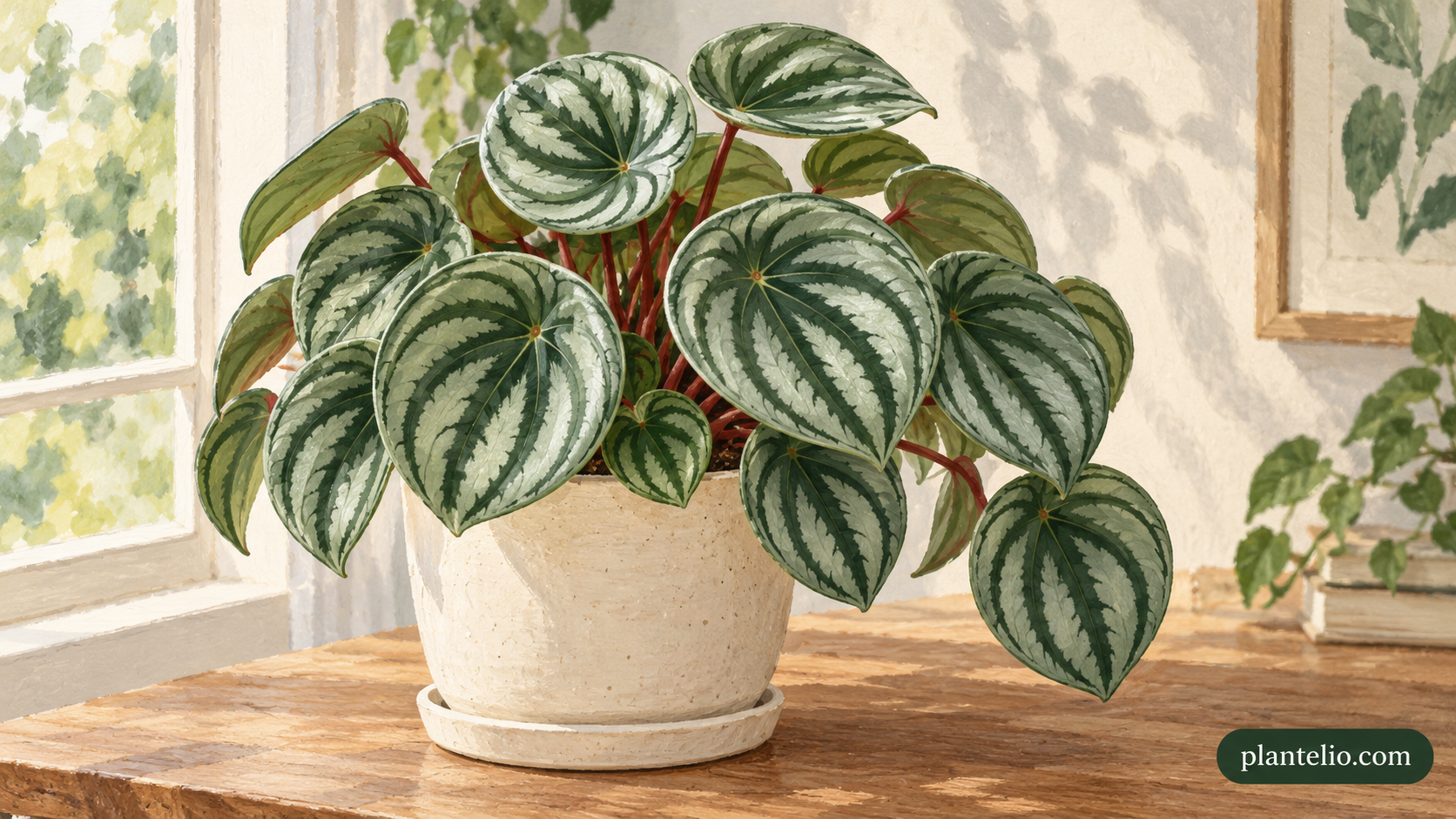
NC State describes crinkled, velvety leaves with bronze tones, lighter green edges and reddish undersides. The uneven surface is part of the plant’s appearance. Compare a suspicious area with several other leaves before treating normal texture as damage.
RHS describes a tender trailing perennial around 25cm tall. A plant extending over the edge of a pot is showing its growth habit, not necessarily a failure to stand upright.
Choose an accessible, sheltered position
RHS recommends bright indirect light, high humidity and protection from draughts. Use our bright indirect light guide to assess a real shelf or tabletop. Keep enough access around the plant to inspect the mix and the backs of leaves.
RHS also identifies it as suitable for terrariums and bottle gardens. That is a possible growing setup, rather than a requirement to put every newly purchased plant into glass immediately. Decide where you can maintain and observe it consistently.
Inspect moisture before watering
NC State recommends moderate watering during active growth and less from autumn into late winter. Our soil moisture checking routine helps you gather evidence from the pot instead of watering only because a reminder appeared.
Record the condition of the mix at each check. This is particularly useful when leaves obscure the surface. Separate a change in leaf appearance from your actual moisture observation so one does not substitute for the other.
Choose a compact or trailing outline
NC State notes that pinching stem tips helps keep growth compact and that stem cuttings can produce new plants. Decide on the shape you want before removing growth; a naturally trailing display does not need to be made perfectly round.
Photograph the plant before shaping it and label any cuttings you keep. NC State reports that flowering is uncommon indoors, so a lack of blooms is not a reason by itself to change an otherwise successful routine.
Sources: NC State Extension: friendship plant; RHS: Pilea involucrata.










Post Comment