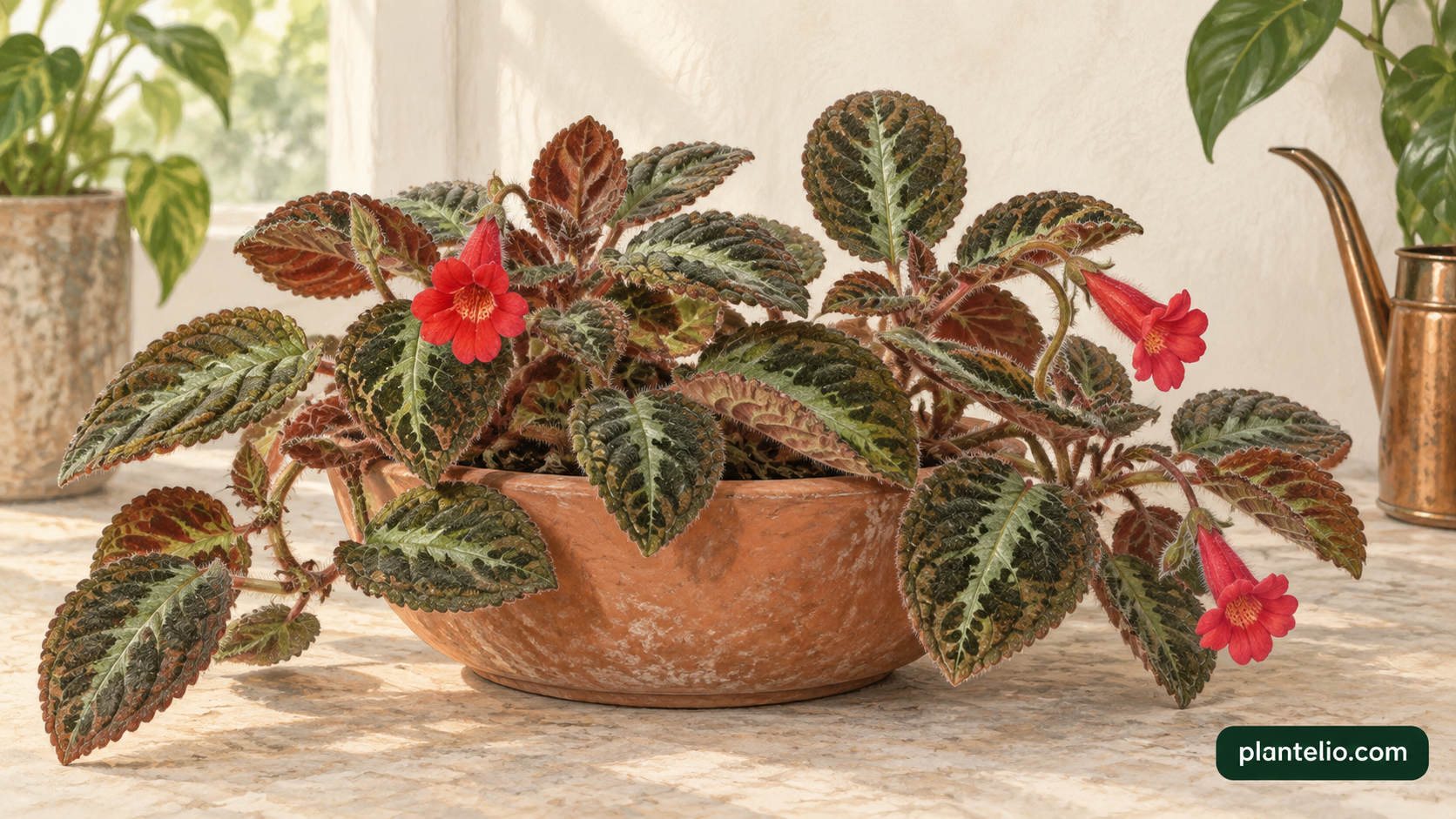
Flame Violet Care: Warmth, Humidity and Dry Leaves
Flame violet care involves two different moisture questions: how damp the potting mix is and how humid the surrounding air is. Episcia plants are grown for patterned foliage and small colorful flowers. Keeping them comfortable does not mean keeping their leaves wet.
Choose a warm, bright position
Clemson Extension recommends bright, indirect to medium natural light and warm conditions around 70–80°F (21–27°C). It also recommends humidity above 50 percent. Those requirements make the actual growing location more useful than a room label such as “bathroom.”
Check the position against our bright indirect light guide. NC State warns that full direct sun can scorch Episcia cupreata. A sheltered-looking shelf still needs checking when direct sun reaches it at a different time of day.
Keep the mix slightly moist
Clemson advises allowing the soil surface to dry slightly while avoiding complete drying of the plant. It recommends a rich, well-drained medium. Our soil moisture checking guide explains ways to inspect the pot before watering.
The purpose of a check is to understand this plant’s condition. It is not a reason to wait for the same degree of dryness you might use for a desert succulent. Put plants with different moisture needs on separate care notes even if they share a shelf.
Humidity is not a wet leaf surface
NC State says flame violets need high humidity but do not tolerate water on their leaves well. Direct water toward the medium when watering. Do not assume that repeated leaf spraying is the right response to a dry room.
NC State also warns that excessive water or inadequate air circulation can cause dieback. A humid display should still be accessible for inspection. Avoid hiding the plant so completely among other foliage that you cannot see the stems and growing medium.
Allow room for creeping growth
NC State describes a creeping habit suited to hanging baskets, with cultivars offering different leaf and flower colors. Choose a display that accommodates spreading stems without snagging them during watering.
Keep the cultivar label if supplied. Comparing your plant with a different color form can create a false impression of a problem. Judge changes against its own healthy foliage and the conditions you can measure.
Sources: NC State Extension: Episcia cupreata; Clemson Extension: flame violets.










Post Comment