Ripple Peperomia Care: Healthy Ridges and Careful Watering
Ripple peperomia care starts with recognizing that wrinkles can be normal. Peperomia caperata has deeply ridged leaves, unlike the smooth foliage of some other peperomias. Do not try to correct its natural texture with extra water simply because the surface looks puckered.
Learn the plant’s normal appearance
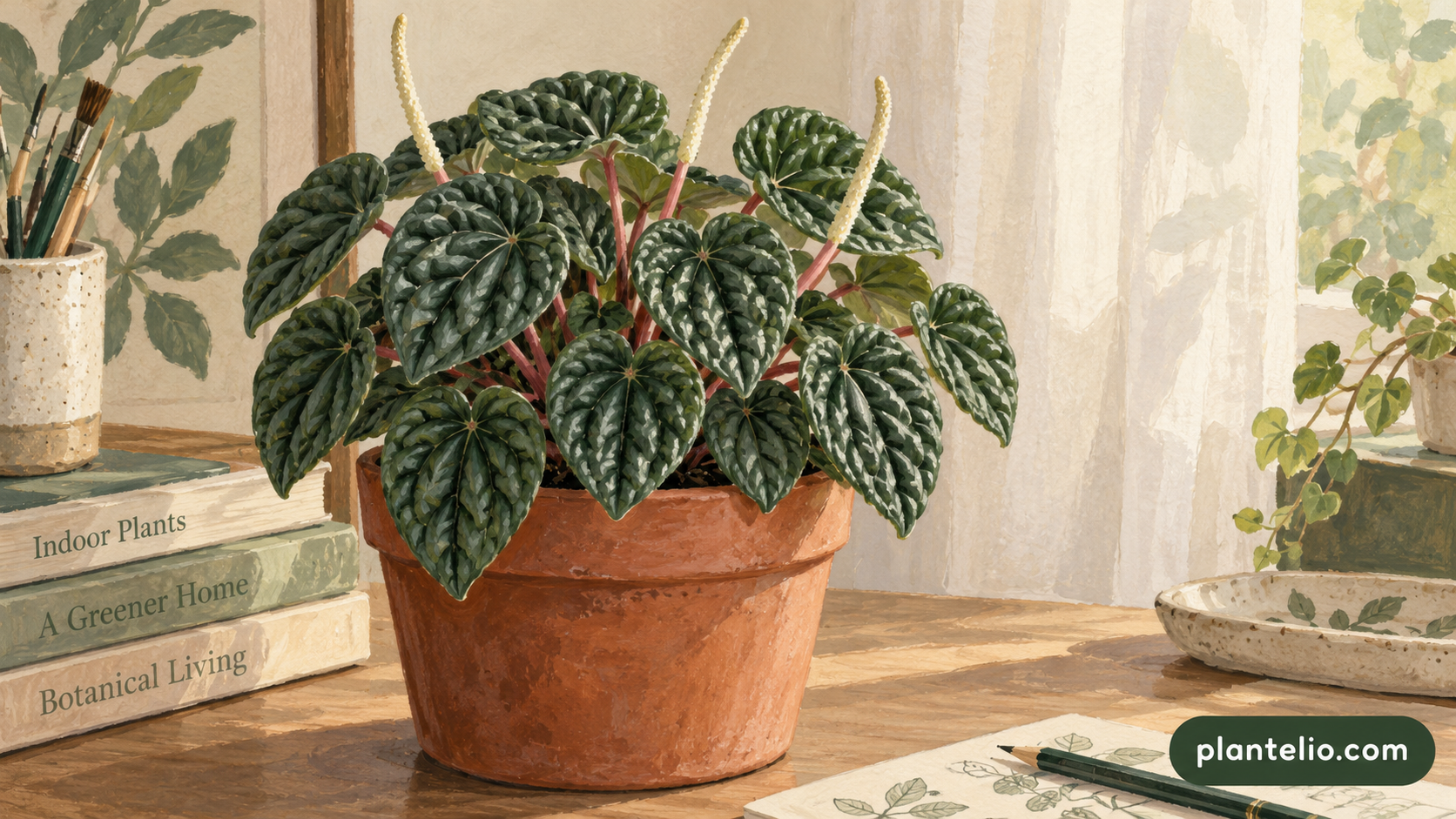
NC State describes heart-shaped, deeply furrowed leaves and cream-colored flower spikes. Leaf stalks are often pinkish or reddish. Cultivars vary in color, so keep the name on the label rather than expecting every specimen to match a green plant in a photograph.
Compare an unfamiliar mark with several healthy leaves on the same plant. A consistent ridge pattern is different from a newly collapsed area. When asking for help, include a whole-plant photograph as well as a close-up so the normal shape remains visible.
Use filtered light
NC State identifies medium, filtered light as suitable and warns against very drafty locations. Our bright indirect light guide helps you assess a desk or shelf without relying only on the room’s window direction.
RHS describes a compact mound reaching about 20cm (8in), with thick leaves on fleshy stalks. This makes it practical for a small display, but choose a spot where you can still reach the potting surface.
Avoid both extremes of watering
NC State warns against wet soil as well as very dry soil and recommends a porous, well-drained mix because root rot is a risk. RHS recommends moderate summer watering and less in winter. Use our soil moisture checking routine to observe the mix instead of deciding from leaf texture alone.
Inspect the pot before adding water, particularly when the foliage hides the surface. A repeated calendar reminder can prompt an inspection; it should not become an automatic instruction to water.
Recognize the flower spikes
RHS describes the upright tail-like structures as spikes of tiny greenish-white flowers. They are normal growth, not stray roots that need pushing into the soil. The plant does not need showy petals to be flowering.
RHS also lists leaf-stalk or leaf-blade cuttings as propagation options in spring and summer. Treat propagation as a separate project with a healthy plant, rather than removing leaves merely because their natural ridges look unusual.
Sources: NC State Extension: Peperomia caperata; RHS: emerald ripple pepper.

Post Comment