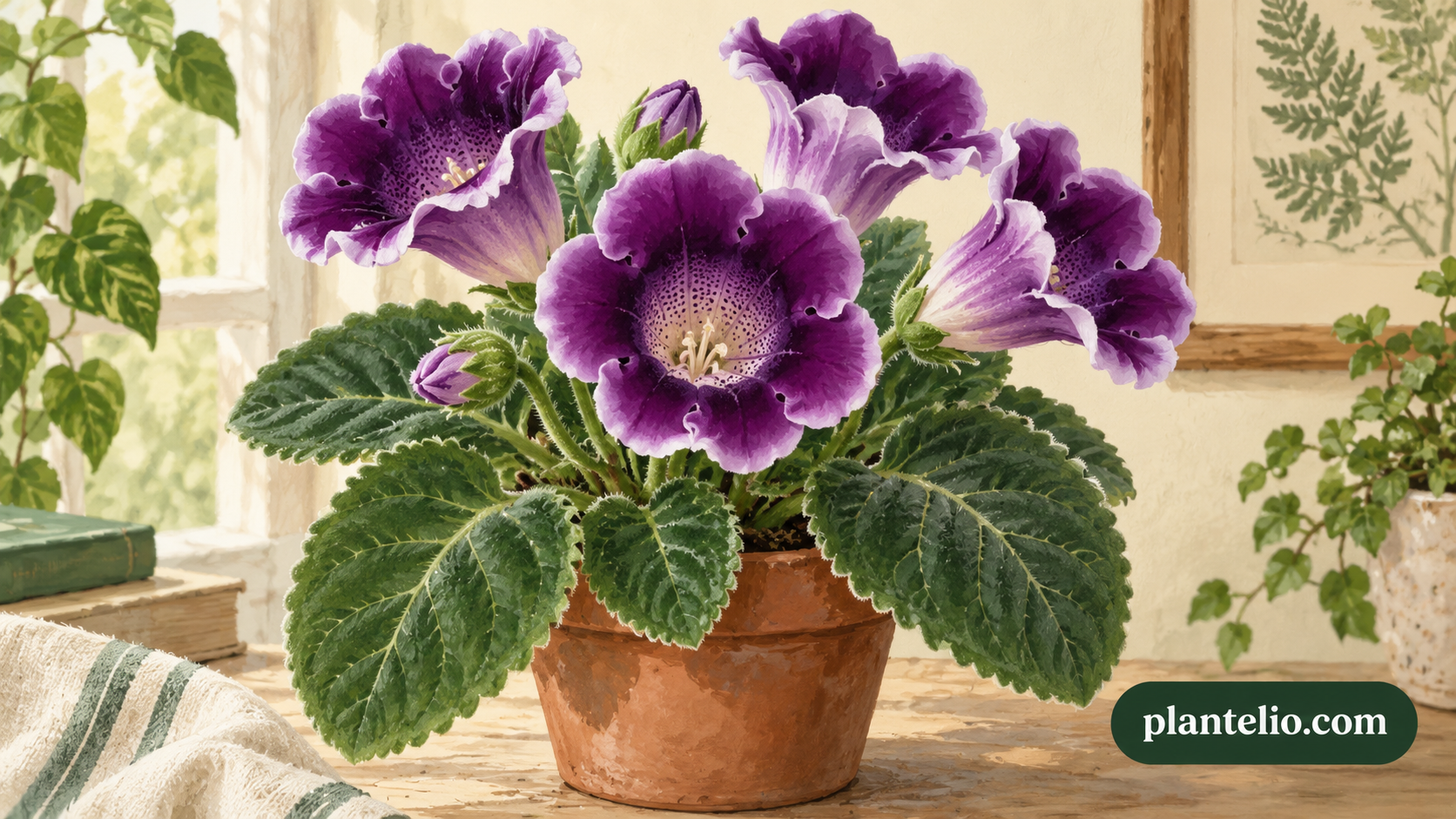
Gloxinia Care: Flowers, Watering and the Rest After Blooming
Gloxinia care changes when the flowering display ends. Florist’s gloxinia, Sinningia speciosa, is a tuberous plant, so its routine can include both active growth and a period of rest. Keep the plant label rather than assuming every faded flowering gift needs identical treatment.
Give the flowers a suitable display position
Iowa State Extension recommends a bright location and temperatures of 65–75°F (18–24°C) for an actively growing gloxinia. Its large, velvety bells can provide several weeks of flowers with good care.
NC State recommends bright indoor light without direct sun. Use our bright indirect light guide to describe the actual position. Look at the window during the hours you normally miss, especially if the plant is displayed on a table some distance away.
Keep active growth evenly moist
Iowa State recommends evenly moist potting soil during growth. Our soil moisture checking guide can help you inspect the pot before deciding whether more water is needed.
NC State cautions against overhead watering because it can encourage gray mold or crown rot. Direct water toward the growing medium instead of pouring across the foliage. Remove spent flowers and yellowing or dying leaves as part of routine maintenance.
Keep a simple record of flowering and watering observations. Note whether a change affects one old flower, several leaves, or the whole plant; those descriptions are more useful than recording only that it looks unhappy.
Understand the rest after flowering
Iowa State describes gradually reducing watering after bloom to induce dormancy. Once the foliage dies back, trim it away and rest the pot in a dark, cool place at 55–60°F (13–16°C) for two to three months.
When new growth appears, its guidance is to repot the tuber in fresh growing medium, return it to a bright, warm, humid location and resume regular watering. Treat this as a seasonal process rather than a promise of immediate flowers.
Label any resting pot with the plant name and the date. That small step prevents an apparently empty container from being mistaken for discarded compost.
Sources: Iowa State Extension; NC State Extension.











Post Comment