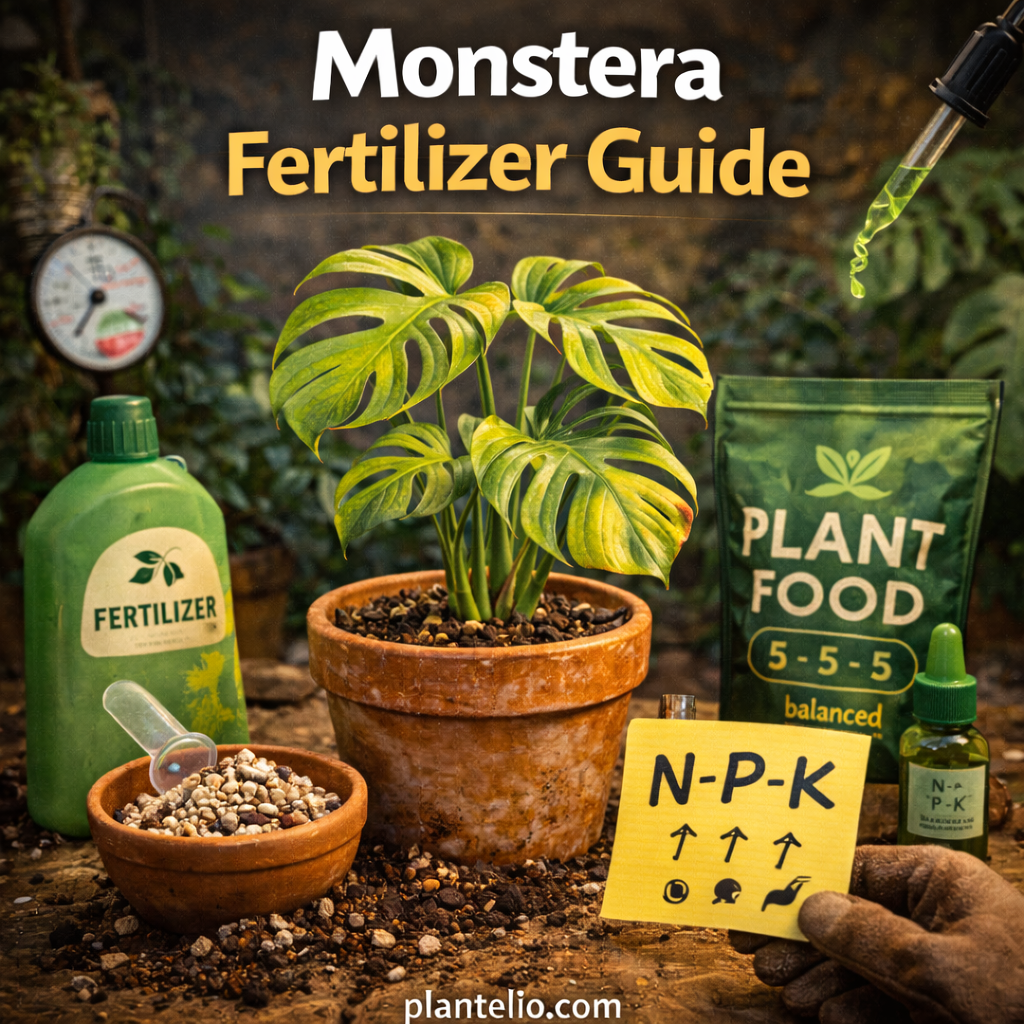
Monstera Fertilizer Guide: Best Fertilizer, Schedule, and How to Use It Safely
Fertilizing your Monstera the right way can mean bigger leaves, faster growth, and stronger stems. But fertilizing the wrong way can cause brown tips, yellow leaves, and even root damage.
This complete guide explains which fertilizer is best for Monstera, how often to fertilize, the best NPK ratios, and exactly how to apply fertilizer safely—without burning your plant.
New to Monstera care overall? Start here first: Monstera Care Guide.
Do Monsteras Need Fertilizer?
Yes—Monsteras are fast-growing tropical plants, and indoor pots have limited nutrients. Over time, soil nutrients get used up or washed out through watering. Fertilizer replenishes what the plant needs for healthy, consistent growth.
If your Monstera is still producing new leaves but they look smaller than before, fertilizer can help—as long as light, watering, and soil are correct.
If your plant is struggling, fix the basics first: Monstera Light Requirements and Monstera Watering Guide.
Best Fertilizer Type for Monstera
The best fertilizer depends on your goals (fast growth vs gentle maintenance) and how confident you are with dosing. Here are the best options for most indoor Monsteras:
1) Balanced Liquid Fertilizer (Best for Most People)
A balanced liquid fertilizer is the easiest and most controllable option. You can dilute it and apply it during watering. Look for a balanced formula such as 10-10-10 or 20-20-20 and use it at a reduced dose.
2) Slow-Release Granules (Best for Low-Maintenance Feeding)
Slow-release fertilizers feed gradually for weeks. They are convenient, but overdosing is harder to fix once granules are in the soil. If you choose this method, use a conservative amount.
3) Organic Fertilizers (Best for Gentle, Slow Feeding)
Organic options (worm castings, compost, fish emulsion) can be gentle and effective. They work well for steady growth but are typically slower and can vary in strength.
Best NPK Ratio for Monstera
Monstera does best with a balanced or slightly nitrogen-forward fertilizer:
- Balanced: 10-10-10, 20-20-20 (great general choice)
- Slightly higher nitrogen: 3-1-2 style ratios (good for foliage growth)
- With micronutrients: Look for Mg, Fe, Mn, Zn (helps leaf color and overall vigor)
Avoid very high-phosphorus “bloom boosters” for Monsteras. Monsteras are grown mainly for foliage and structure, not flowers.
How Often to Fertilize Monstera
Fertilizer frequency depends on season and growth rate. A simple, safe schedule:
Spring & Summer (Growing Season)
- Every 2–4 weeks with a diluted liquid fertilizer
- Or slow-release granules once every 2–3 months (follow label at reduced rate)
Autumn
- Reduce to once a month, or stop if growth slows
Winter
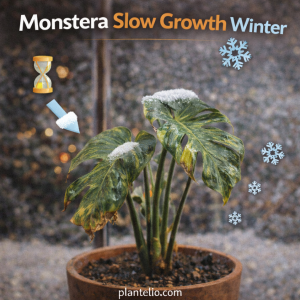
- Usually stop fertilizing (most indoor Monsteras slow down in winter)
If your Monstera isn’t producing new leaves, fertilizer won’t fix the core issue—start here: Monstera Not Growing.
How to Fertilize Monstera Correctly (Step by Step)
- Water first (or fertilize on a moist soil day): Fertilizing dry soil increases burn risk.
- Dilute your fertilizer: Use 1/4 to 1/2 strength of the label recommendation for indoor Monsteras.
- Apply evenly: Pour around the soil surface, not directly onto the stem.
- Drain excess: Let water drain fully and empty the saucer.
- Repeat only during active growth: If growth pauses, pause feeding.
A healthy soil mix makes fertilizing safer and more effective: Monstera Soil Guide.
How to Avoid Fertilizer Burn (Most Common Mistake)
Fertilizer burn happens when roots are exposed to a concentration that’s too strong. It often shows as brown tips or crispy edges.
Signs of Fertilizer Burn
- Brown leaf tips or crispy edges
- White crust on soil surface
- Leaf yellowing soon after feeding
- Sudden decline despite “good care”
If you’re seeing browning, compare symptoms here: Monstera Brown Tips.
How to Fix Fertilizer Burn
- Stop fertilizing immediately.
- Flush the soil: Run clean water through the pot for 1–2 minutes, then let it drain completely.
- Remove salt crust: Gently scrape the top 1–2 cm of soil if it has white buildup.
- Resume later: Wait 3–4 weeks, then restart at 1/4 strength.
Yellow Leaves After Fertilizing: What It Means
If leaves turn yellow after feeding, it can be:
- Too strong fertilizer (burn/stress)
- Overwatering combined with feeding
- Root damage already present
Use this guide to diagnose properly: Monstera Yellow Leaves.
Do Variegated Monsteras Need Different Fertilizer?
Variegated Monsteras (like Albo and Thai Constellation) grow slower because they have less chlorophyll. They still benefit from fertilizer, but they often need:
- More stable light (bright indirect)
- Lower, gentler feeding (avoid strong doses)
- Consistent watering (avoid stress swings)
Comparing types? See: Monstera Types (Deliciosa vs Adansonii vs Albo vs Thai).
Can Fertilizer Make Monstera Grow Faster?
Fertilizer helps only when the plant already has:
- Enough light
- Correct watering rhythm
- Airy soil and healthy roots
If those are in place, fertilizer can noticeably increase growth speed during spring and summer.
Want realistic expectations? Monstera Growth Rate.
When Fertilizing is a Bad Idea
Skip fertilizer temporarily if:
- Your plant has root rot or suspected root issues
- You just repotted (fresh soil already contains nutrients)
- It’s winter and growth has stopped
- The plant is stressed from pests or extreme conditions
If you suspect root issues, check this first: Monstera Root Rot.
If you recently changed pots, follow: Monstera Repotting Guide.
Monstera Fertilizing Quick Checklist
- ✅ Bright indirect light
- ✅ Water only when top soil dries
- ✅ Airy, well-draining soil
- ✅ Fertilize only in growing season
- ✅ Use 1/4–1/2 strength to avoid burn
- ✅ Flush soil occasionally to prevent salt buildup
FAQ
What is the best fertilizer for Monstera?
A balanced liquid fertilizer (like 10-10-10 or 20-20-20) used at 1/4–1/2 strength is the safest, most effective option for indoor Monsteras.
How often should I fertilize Monstera?
During spring and summer, fertilize every 2–4 weeks with diluted liquid fertilizer. Reduce or stop in autumn, and usually stop in winter.
Can I fertilize Monstera in winter?
Most of the time, no. Monsteras usually slow down in winter, and fertilizing can cause salt buildup and stress.
Why did my Monstera get brown tips after fertilizing?
Brown tips after feeding often indicate fertilizer burn or salt buildup. Stop fertilizing, flush the soil, and restart later at a weaker dose.
Should I fertilize after repotting?
Wait 2–4 weeks after repotting. Fresh soil often has enough nutrients, and feeding too soon can stress new roots.


Post Comment