False Aralia Care: Fine Leaflets and Room to Grow
False aralia care begins with recognizing the plant behind the label. Plerandra elegantissima also appears under the older names Dizygotheca elegantissima and Schefflera elegantissima. Keep those names together in your notes so that an older reference does not look like a different purchase.
Expect the foliage to change with age
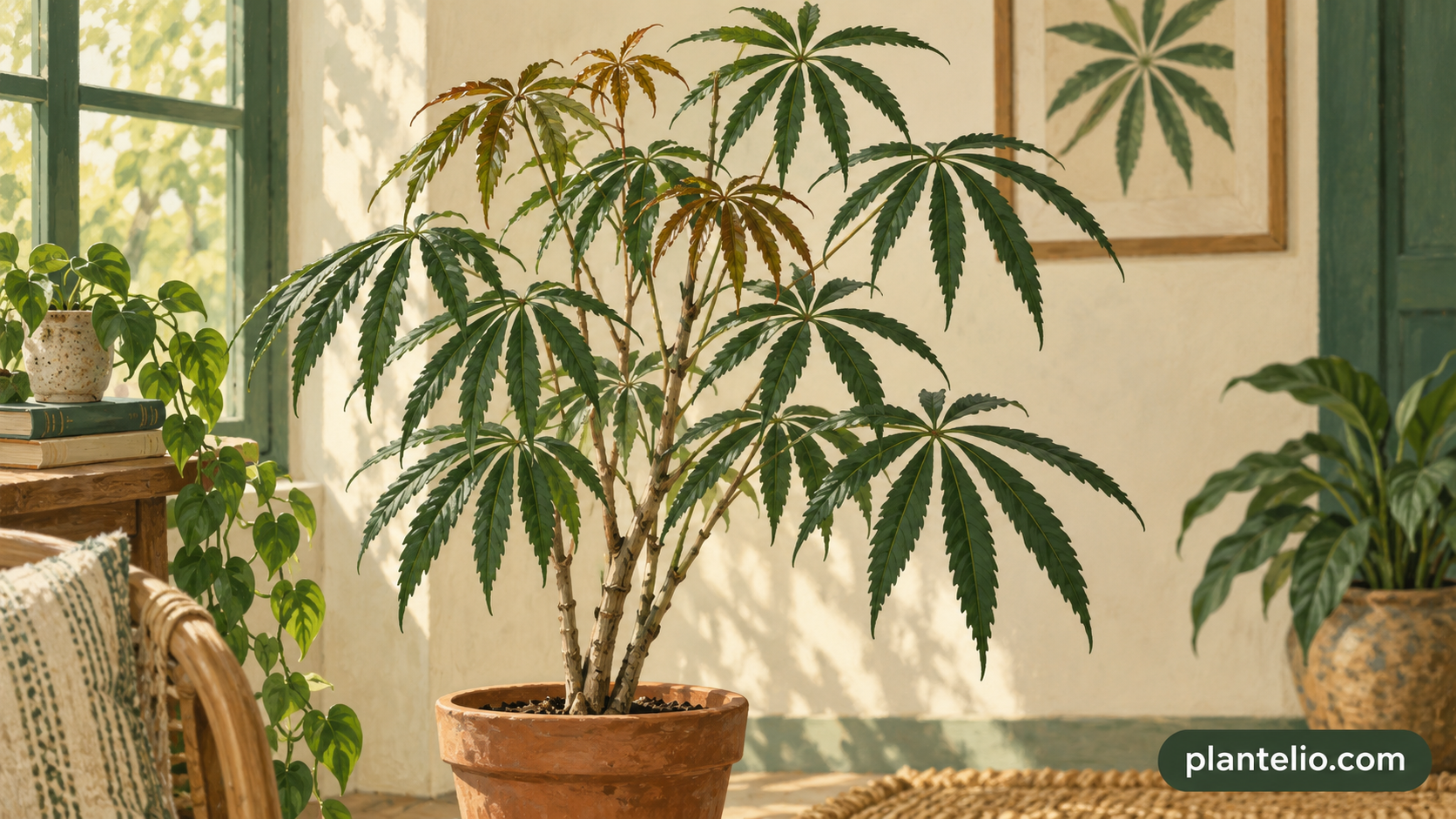
NC State describes palmately compound leaves with narrow, toothed leaflets. Young plants have especially fine foliage; mature leaves become much larger and lose some of that youthful glossiness. A change in leaf shape as a plant matures is not automatically damage.
Take a whole-plant photograph when you bring it home, including the pot for scale. Later photographs from the same position make it easier to compare the overall outline instead of judging every new leaf against a nursery image.
Plan an upright display
UF/IFAS describes false aralia as an upright accent plant that performs best in light shade and tolerates bright light. Our guide to indoor light helps you record the light actually reaching the plant.
Leave enough space to inspect the stems and reach the container. A narrow decorative corner may suit its silhouette, but a display that is difficult to access makes routine checks easy to overlook. Measure the available height before choosing a permanent position.
Check the pot and the room separately
NC State recommends moist potting soil and high humidity. UF/IFAS specifies fertile, well-drained soil. Our soil moisture checking methods help you observe the container rather than automatically watering on a fixed day.
Keep air conditions and pot moisture as separate entries in your care notes. A room observation does not tell you what is happening inside the pot. Record the mix condition and any recent changes to the display before adjusting the routine.
Keep inspections practical
NC State lists mealybugs, aphids, spider mites, thrips and scale among pests to watch for. Examine both the fine foliage and stems during regular checks. Photograph anything unfamiliar before deciding what it is.
UF/IFAS notes that pruning can develop a small tree form. Decide on the shape you want before cutting; a plant grown as a tall accent has a different purpose from a compact tabletop specimen.
Sources: NC State Extension; UF/IFAS Extension.


Post Comment